
NUST Launches Satellite Data Receiving Ground Station to Advance Namibia’s Space Science Capacity
NUST officially launched its Satellite Data Receiving Ground Station, marking a significant step in strengthening Namibia’s capacity in space science, research and innovation.
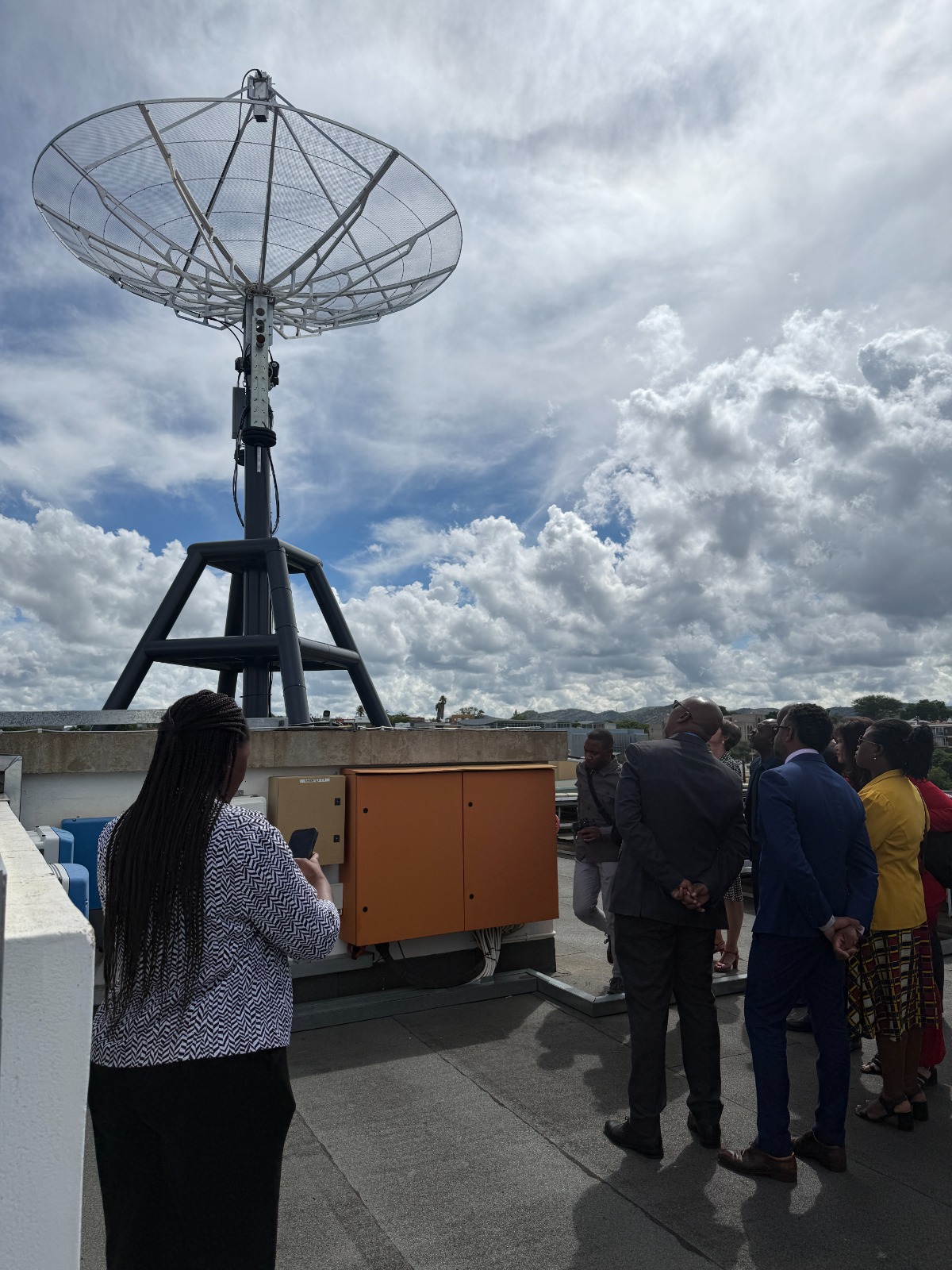
The facility, housed under the University’s Namibia Institute of Space Technology (NIST), is located on the rooftop of the Mining Auditorium building on Lower Campus. It represents a strategic investment in advanced technology that will support the use of satellite data for research, environmental monitoring, disaster risk management, and other national development priorities. The initiative aligns with Namibia’s Space Science and Technology Policy (2021–2030), Vision 2030 and the Sixth National Development Plan (NDP6).
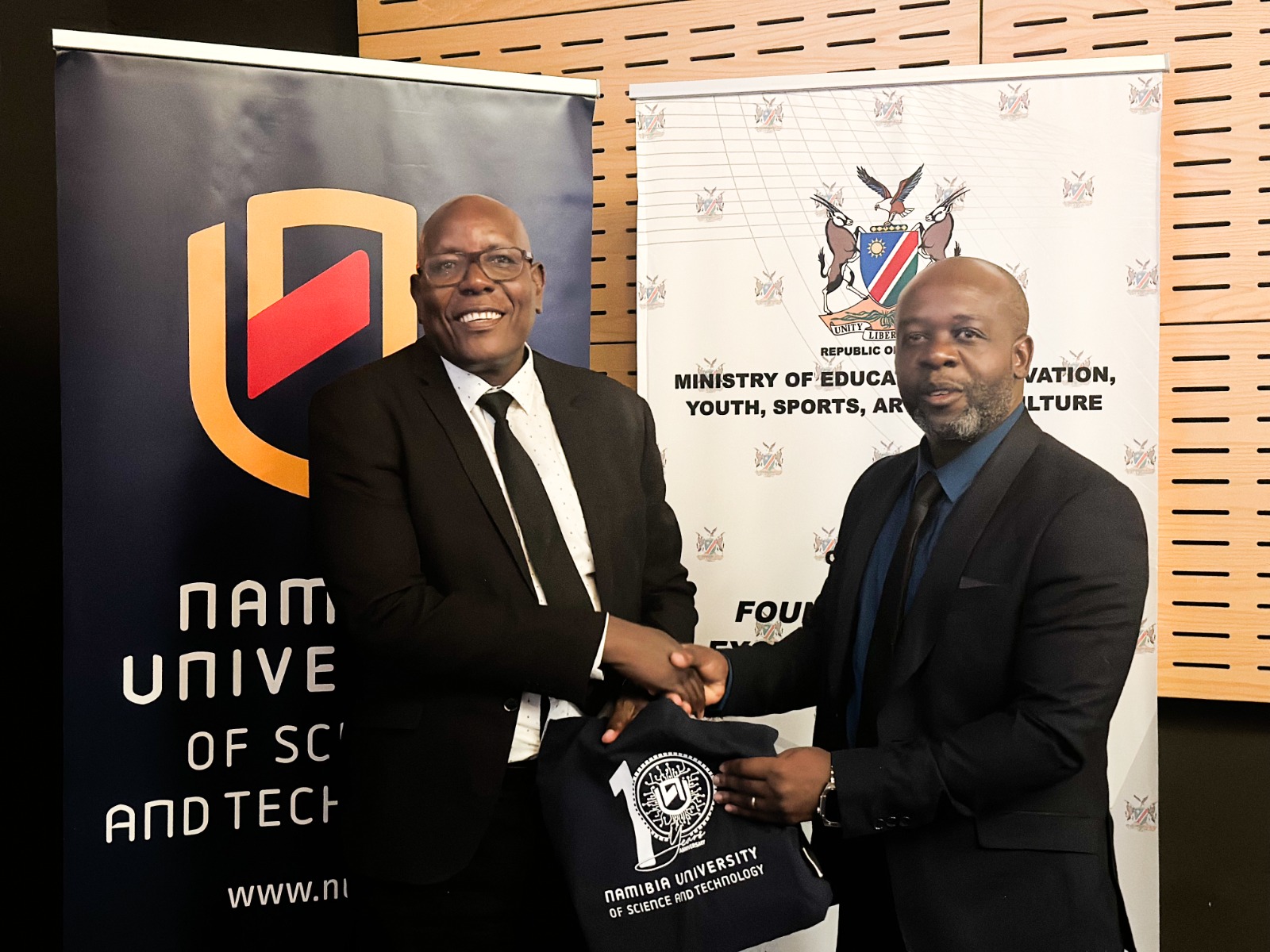
Delivering remarks on behalf of the Ministry of Education, Innovation, Youth, Sports, Arts and Culture, Deputy Executive Director Dr Lisho Mundia emphasised the importance of collaboration in advancing Namibia’s space science capabilities. “You can never go alone,” he said, calling on institutions, researchers and partners to work together to strengthen Namibia’s growing space science ecosystem.

Acting Vice-Chancellor Prof Andrew Niikondo described the moment as a milestone for both the institution and the country. He noted that the ground station provides a practical platform for exploring, developing and applying space technologies, adding that it reflects NUST’s commitment to developing human capital and advancing high-level technical skills.
He also announced the University’s plans to introduce a Master’s programme in satellite system design and communication, which will use the ground station as a hands-on training platform for postgraduate students and researchers.
The facility is already attracting attention beyond Namibia’s borders. According to Dr Smita Francis, Senior Lecturer in the Department of Mechanical, Industrial and Electrical Engineering and Coordinator of NIST, several universities have approached NUST to explore the possibility of using the ground station to monitor their nanosatellites.
The launch of the Satellite Data Receiving Ground Station forms part of the University’s broader commitment to advancing science and innovation while positioning Namibia to participate more actively in regional and global space initiatives.