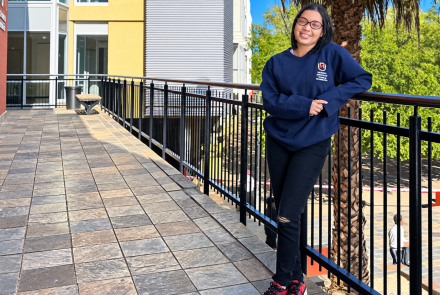


Prof Mahalie Gets Her Research Flowers
At the recently held National Commission on Research Science and Technology (NCRST) Research Excellence Awards, Prof Roswitha Mahalie was honoured as the Best Female Mid-Career Researcher.
Currently serving as Head of the Department of Preventative Health Sciences at NUST, Prof Mahalie shared insights into her impactful work and journey in an interview with the NUST Brief.
NUST Brief (NB): In your opinion, how important are platforms like the NCRST Awards in promoting scientific excellence in Namibia?
Prof Roswitha Mahalie (RM): The NCRST Awards serves as an ideal springboard for researchers to showcase and celebrate their hard-earned work, supporting evidence-based policy decisions for sustainability. It also encourages researchers to gain recognition, motivation, relevance, and visibility in their respective disciplines, both nationally and internationally.
NB: Can you briefly explain your research and the impact it has on society?
RM: My research niche areas revolve around human and environmental health, nutrition, and strategic health information systems management. These areas are aligned to Namibia’s priority needs focusing on targeted health improvements, including community-based care networks, food security, and strategies for women, children, and adolescents.
NB: Have there been moments of failure or doubt that ultimately helped you grow?
RM: Yes, the ‘what ifs’ are known surfacing when one is most vulnerable. I have realised that one can easily get overwhelmed by academic pressures while navigating the complexities of producing sound research outputs. However, it is important to take each day as it comes, consult widely and adopt a teachable spirit to enhance your personal and professional growth.
NB: Can you share a project you are especially proud of and why it stands out?
RM: A number of my protégées have contributed immensely through peer-reviewed publications, making it difficult to single out one specific project. However, the article on ‘Managing Infodemics during infectious disease outbreaks in Namibia’ highlights a reality that has the potential of shipwrecking the implementation of scientifically proven health interventions in the face of the ever-evolving disease outbreak landscape.
NB: In general, what makes you proudly NUSTodian?
RM: I appreciate being part of a respected yet fast-growing institution that has become a household name, known for preparing graduates who are highly skilled to hit-the-ground running in various professional disciplines. In addition, as a NUSTodian, it gives me immense pleasure to be associated with an institution that prides itself in contributing meaningfully to national priority areas through research and innovation.
NB: What advice would you give to young women in Namibia who aspire to become researchers?
RM: There is no detailed map or one-size-fit-all formula in your pursuit of excellence in research. It is therefore, important to embrace your true self and not let fear hold you back from achieving your dreams. Ensure that your ideas as well as the lived experiences of the research participants are published in reputable journals.