
NUST Hosts Four-Days Inception Workshop for the Multidisciplinary Mobility for a Climate Resilient Africa (MMoCRA) to Strengthen Africa’s Climate Resilience Through Mobility
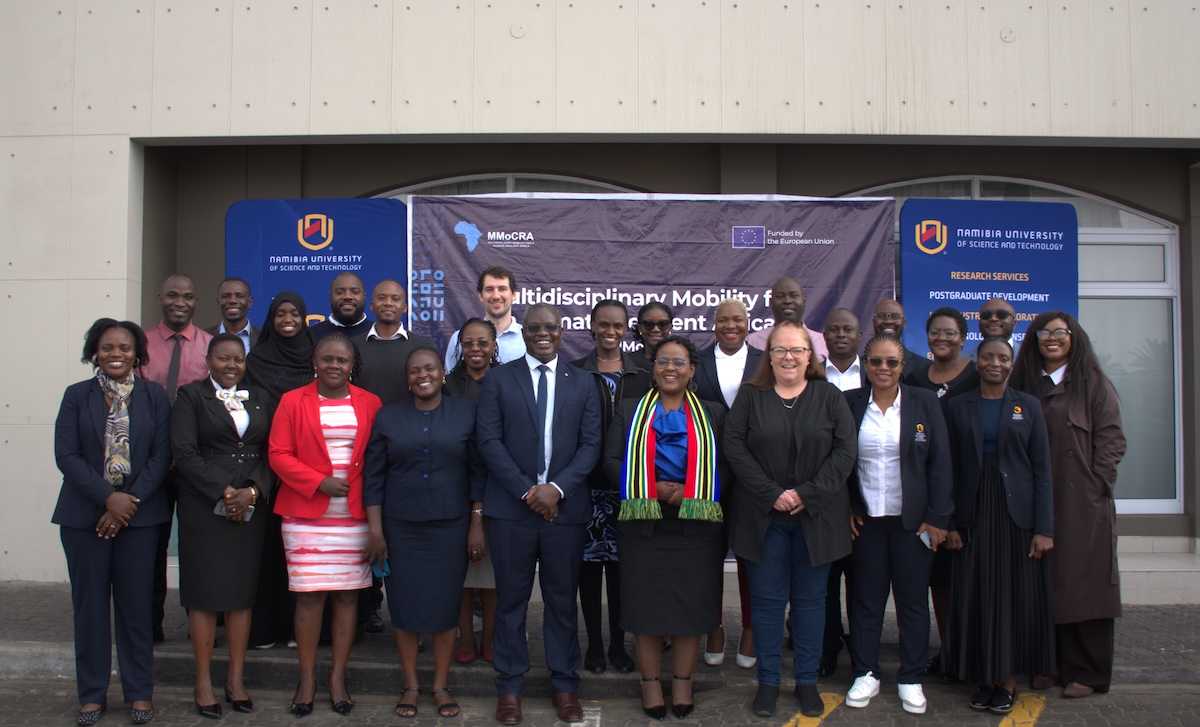
At first glance, academic mobility can sound technical or distant from everyday life. The mobility project is about offering African students, researchers, trainees and university staff a chance to move across African institutions in the consortium, and the European Union Technical partner (University of Twente) learn from one another and create solutions to solve climate problems. The four days inception workshop was, therefore, hosted by the Namibia University of Science and Technology (NUST) in Swakopmund from 27 to 30 April 2026.
MMoCRA is a 48-months European Union-funded project, and a consortium that involves Busitema University, NUST, Strathmore University, Kyambogo University, the University of Cape Town and the University of Twente. The overall objective of the project is to strengthen African universities and equip scholarship holders from across the continent, to contribute to climate-resilient solutions through research, training and academic exchange. The project further aims to support 95 mobility opportunities, including 44 master’s students, 12 doctoral candidates, 20 trainees and 19 staff members.
The project is significant to Africa as it contributes to the climate resilience. Climate change is no longer an abstract issue. It affects water, food systems, land, energy and livelihoods. Climate challenges such as climate change, biodiversity loss, land degradation, food security and water availability are interconnected and require multidisciplinary solutions rooted in African realities.
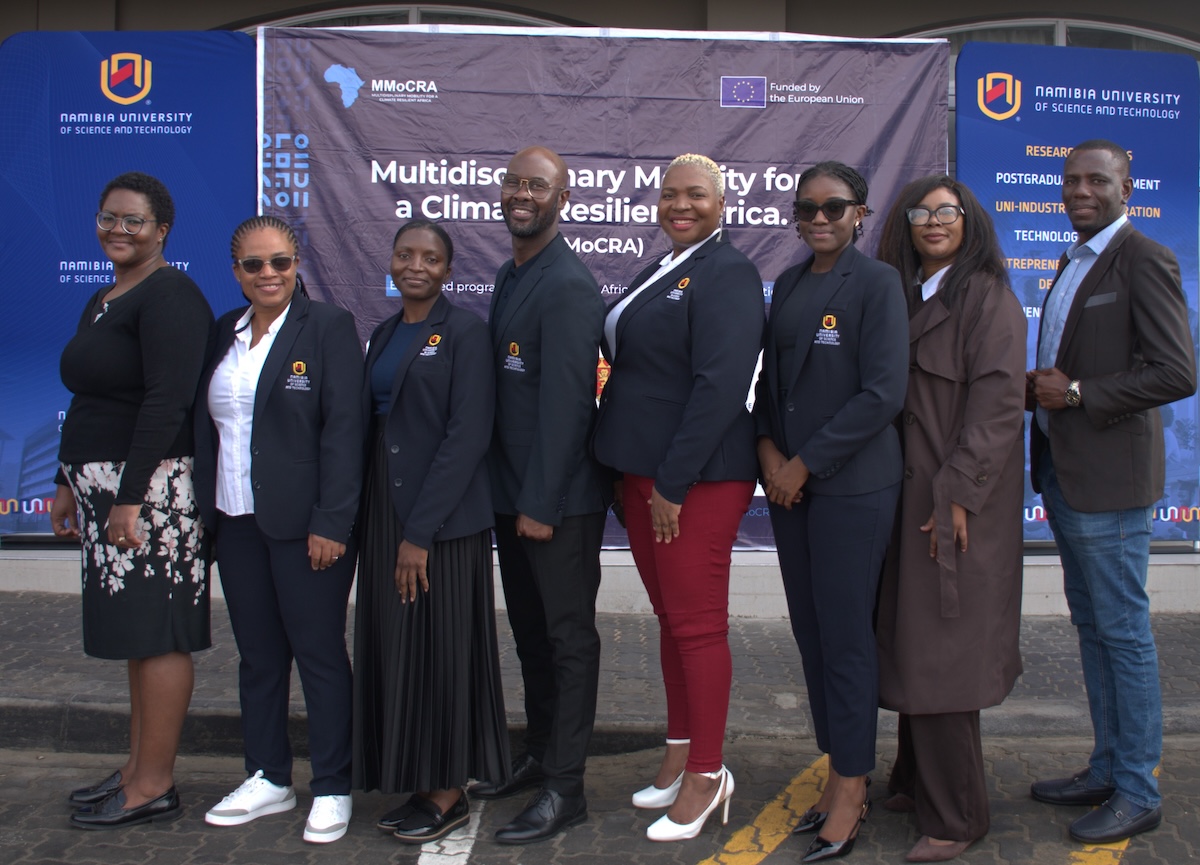
In her opening remarks, Dr. Patrina Mabuku reminded the consortium members that “our shared mission is to build a climate-resilient Africa.” Delivering keynote remarks on behalf of the Deputy Vice-Chancellor: Research, Innovation and Partnerships, Prof Colin Stanley, Dr Bas Rijnen emphasised that “mobility is essential in higher education” because it strengthens knowledge exchange, research and collaboration.
Over the four days, the consortium worked through the practical foundations of project implementation, including scholarship pathways, credit transfer, selection processes, budgeting, monitoring and evaluation. In addition, NUST plays a central role in the sustainability and dissemination of the project data, ensuring that the opportunities, lessons and research outputs are visible, accessible and useful beyond the workshop.