
From A Nurse to a Doctor: Kristine Siseho’s Calling to Care
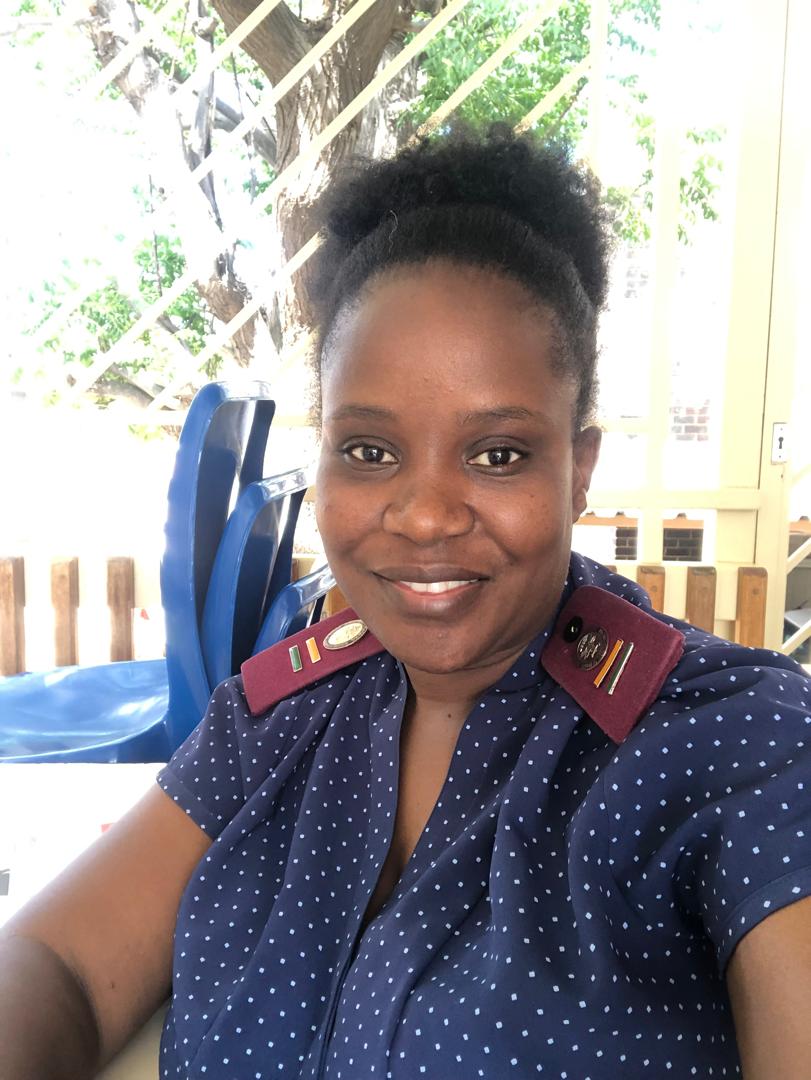
For many at the Namibia University of Science and Technology (NUST), she has always been “Sister” with the calm, steady presence at the campus clinic. The one who listens, reassures, and reminds students that they will be okay. But today, Ms Kristine Siseho stands on the cusp of a new chapter, soon to graduate with a PhD in Health Sciences.
Research with purpose
Kristine’s research interests were not driven by academia alone. It was shaped by lived experience, by faces and stories she could not forget. “What if I could develop a tool that students could use proactively to help identify those who may be silently struggling?” she asked.
That question led to the development of an Early Detection Model for Anxiety, Depression, and Suicidal Ideation – a practical intervention aimed at identifying students in need of support before it is too late. “What kept me going throughout this study was its purpose,” she said. “This research was bigger than me… it was about giving hope, support, and a possible solution to students in need.”
Her new title is one she will carry with pride. But it will not change who she is. “I feel deeply honoured to soon be called Dr Siseho,” she said. “But I remain Sister Siseho in my heart, because caring for people is at the centre of who I am.”
A life rooted in care
Beyond the clinic, Kristine is a wife, a mother of three, and a woman grounded in faith, family, and service. With nearly two decades of clinical experience, her life has always been centred on care – whether at home, in church, or in her profession.
That same sense of purpose carries into her work at NUST, where she has spent over 10 years supporting students through some of their most vulnerable moments.
Turning point
Working on the frontlines of student health opened her eyes to a growing crisis. “I have encountered many students who were deeply broken and struggling,” she said. “Others were experiencing suicidal thoughts, trauma, academic failure, and overwhelming emotional pain that made them feel as though life was no longer worth living.”
What struck her most was not just the scale of the challenge, but the silence surrounding it. “Some did not even know that NUST offers mental health services,” she added.
That realisation became the turning point in her academic journey.
What comes next
Even before she graduates, Kristine is already looking ahead. “My greatest hope is that the model will move beyond research and become a practical tool that makes a meaningful difference in students’ lives,” she said.
She remains open to new opportunities within academia and beyond, driven by a commitment to growth and a desire to contribute more broadly to institutional development. For her, the journey does not end with a qualification; it expands.
#IAMNUST
Kristine’s story is also a reflection of what is possible at NUST: a place where professional experience can evolve into advanced research, and where staff members are actively encouraged and supported to continue their academic journeys.
Through institutional support for further studies, a strong culture of continuous learning, and an environment that values both personal and professional growth, the University creates pathways for staff and students alike to reach their full potential.