
It’s a bird. It’s a plane. NO, it’s the Engineering Students!
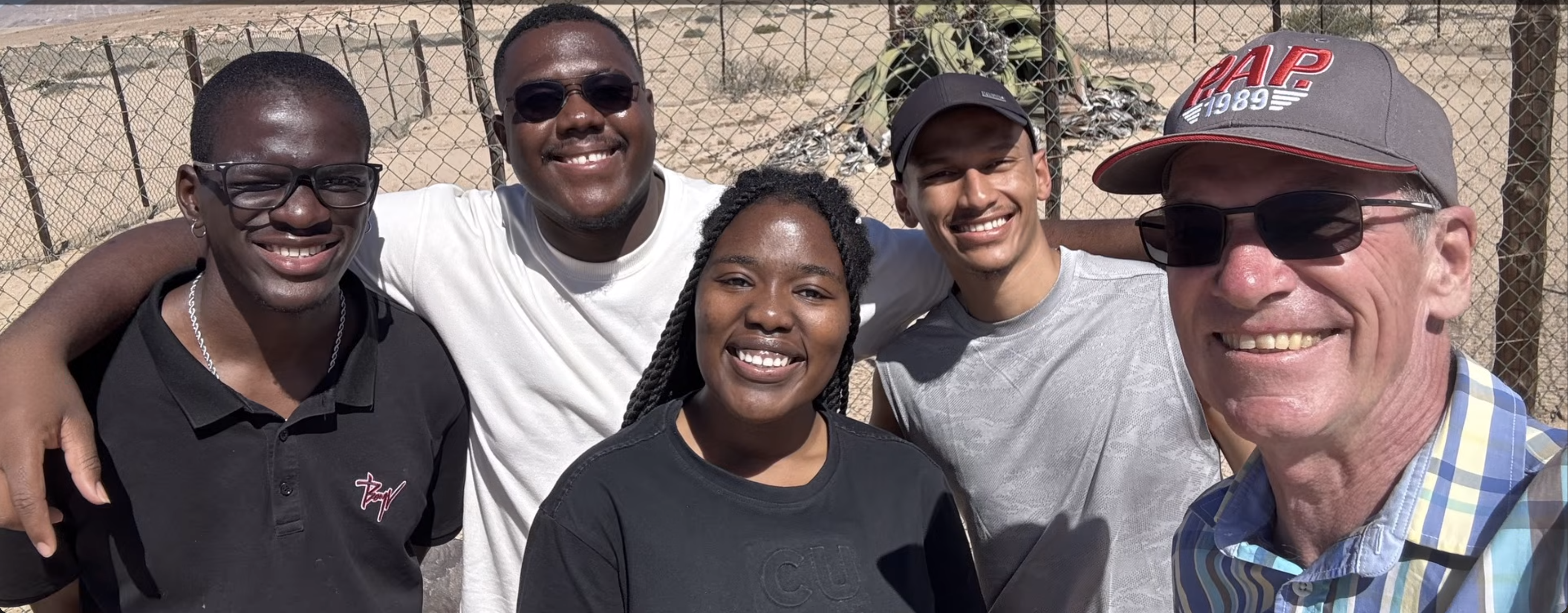
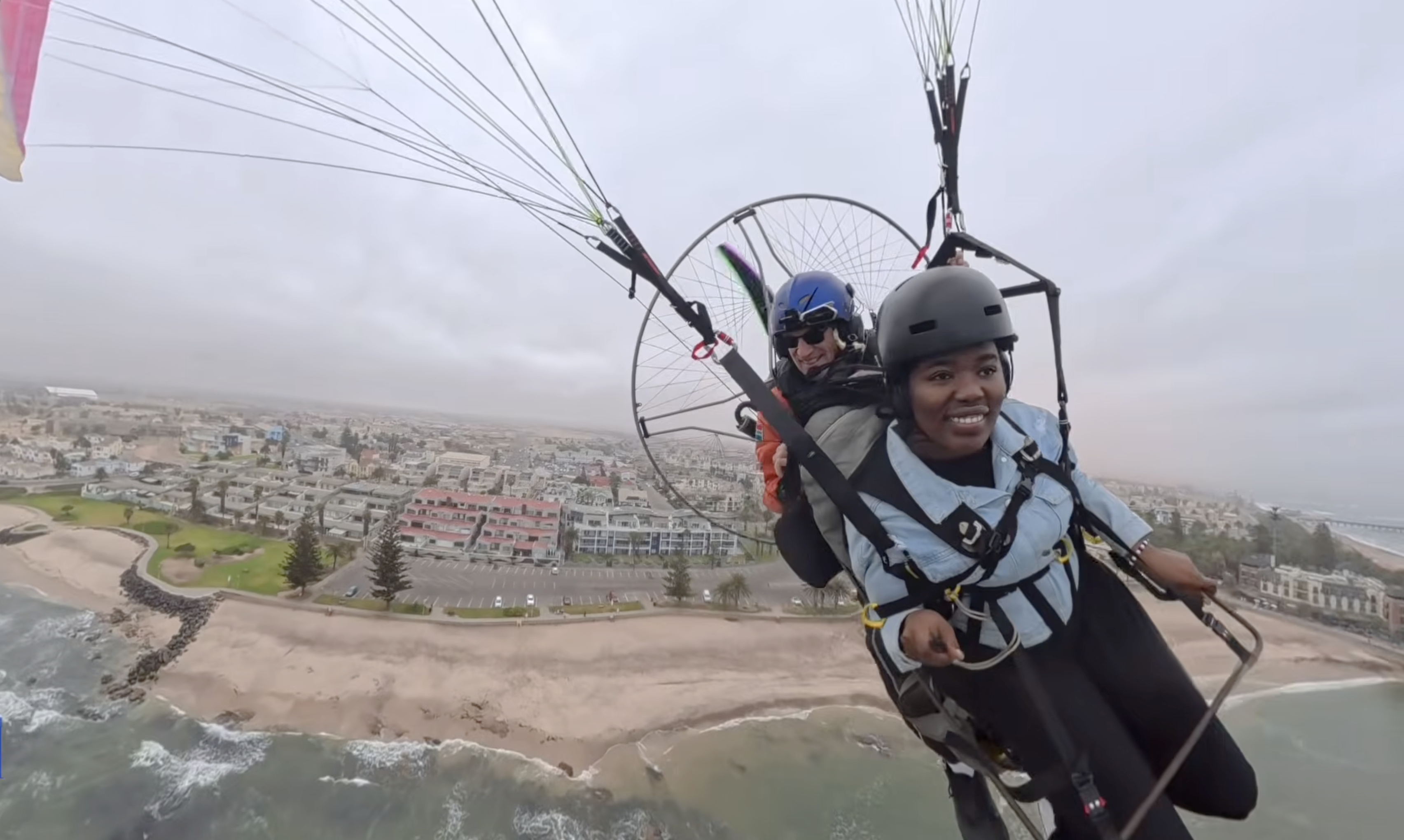
Four Mechanical Engineering students Pretty Mufalali, Elton Gouws, John Tangeni, and Tuli Haifidi, recently took to the open skies, courtesy of Prof Hannes van der Walt, their lecturer in Mechanical, Industrial and Electrical Engineering. The mission: experiencing flight from an entirely new perspective. Their destination: the breathtaking Swakopmund coastline, where paramotoring promised both adventure and insight.
What began as an exciting outing soon evolved into an unforgettable learning experience. Each student embarked on a tandem foot-launch paramotor flight along the Atlantic shoreline, launching from Mile 4 and gliding south towards The Mole before looping back along the coast. Against the backdrop of crashing waves and sweeping dunes, theory transformed into reality.
“A tandem foot-launch paramotor flight represents a refined integration of mechanical, industrial, and electrical engineering,” explained Prof van der Walt. “It combines lightweight aviation structures, high-performance propulsion systems, and precise aerodynamic design to achieve sustained flight.” The setup involves a pilot carrying a motor unit, with a passenger secured in front, utilising a paraglider wing for lift and a propeller for thrust.
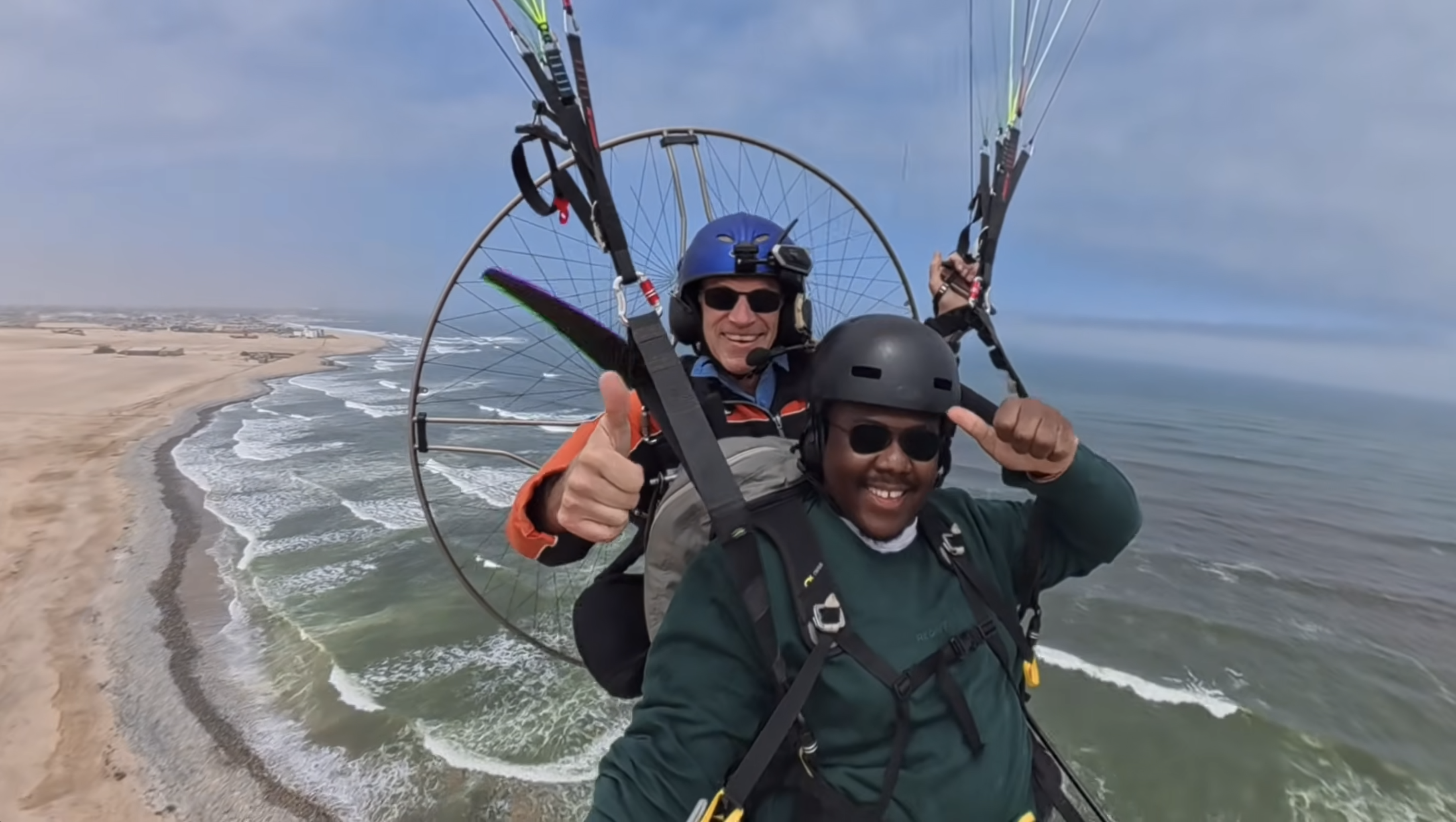
For students accustomed to equations, simulations, and lecture-based learning, the experience offered a rare opportunity to see engineering principles in action. “Once airborne, the experience was truly unforgettable,” said Mufalali, who took to the skies first. “Beyond the beauty of the scenery, it sparked a deeper appreciation for the remarkable engineering behind the paramotor.”
Gouws echoed this sentiment, noting how foundational concepts such as lift, thrust, drag, and stability, often confined to textbooks, became vividly real. “Experiencing these principles firsthand transformed abstract theory into something tangible, dynamic, and inspiring,” he said.
More than just an adventure, the paramotoring weekend served as a powerful reminder of why they chose engineering. “It allowed us to bridge the gap between classroom theory and real-world application,” said Tangeni, “while reigniting the passion and curiosity that inspired us to pursue this field in the first place.”
Watch the full clip here: https://youtu.be/AfdMLt_sing