

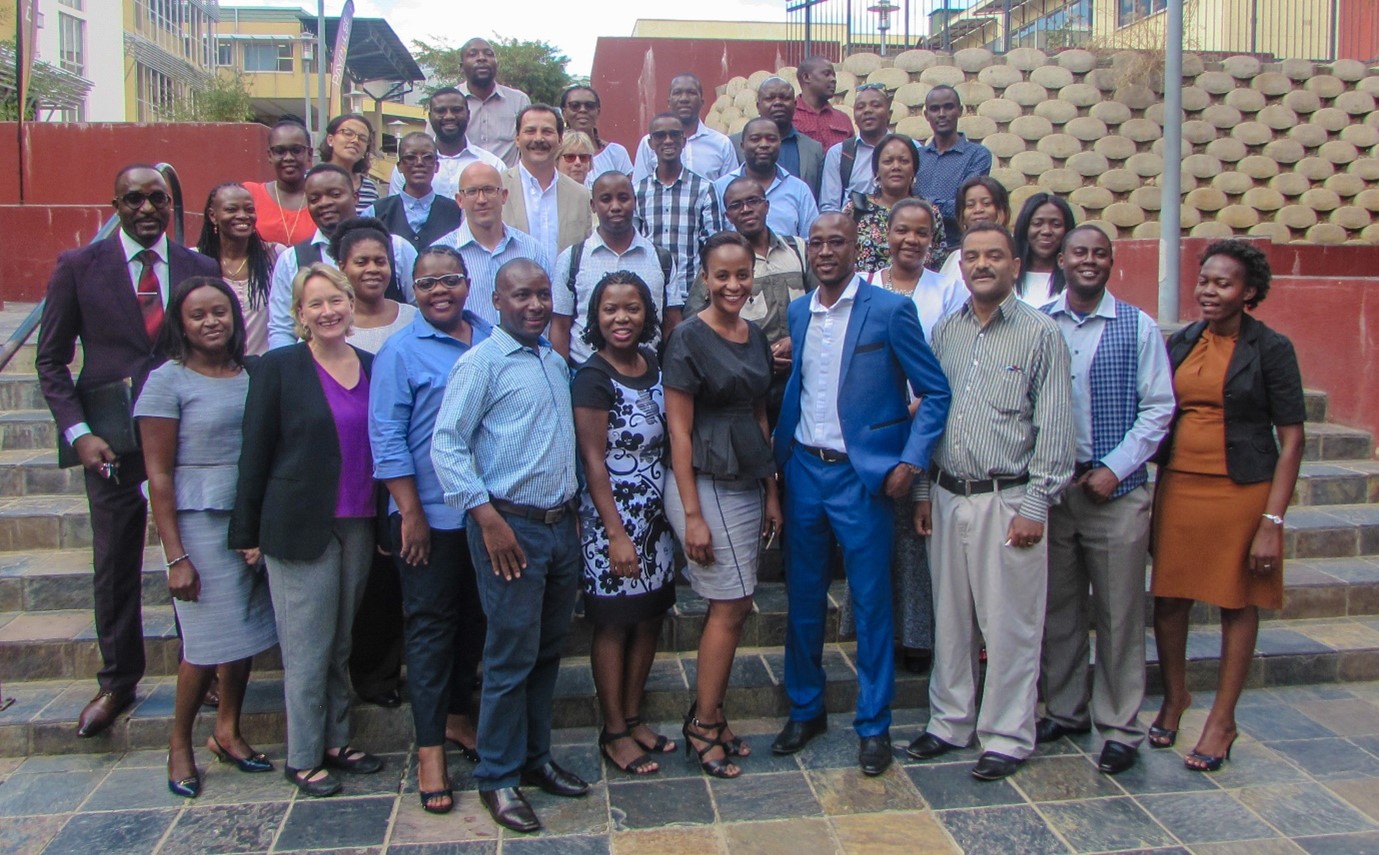
The Education Postgrad Programme
…Ten Years On, Still Learning Forward
The Postgraduate Diploma in Higher Education (PGDHE) reached a significant milestone in January this year, marking 10 years of sustained contribution to teaching excellence and professional development in higher education.
What began in 2016 as a modest Postgraduate Certificate in Higher Education (PGCHE) has grown into one of the University’s signature academic development programmes. The inaugural intake of 23 NUST lecturers was the result of careful planning and collaboration, grounded in the University’s mandate to strengthen teaching and learning. From the outset, the programme was designed to deepen lecturers’ understanding of pedagogy, assessment, and the purposeful use of technology in higher education, while responding to the realities of diverse disciplinary contexts.
Housed initially in the Teaching and Learning Unit, the programme adopted a flipped classroom approach long before blended learning became commonplace. Participants engaged with recorded lectures and readings on the eLearning platform ahead of weekly contact sessions, allowing face-to-face time to be dedicated to discussion, application, micro-teaching, and feedback.
Dr Katherine Carter, who has been a facilitator since the programme’s inception, explains that the emphasis was always on learning by doing. “Participants were encouraged to reflect critically on their own teaching practice and to implement what they learnt in real classrooms,” she said. Weekly reflections became a central feature, capturing both challenges and growth.
Participants consistently described the programme as transformative. Odilo Sikopo, a Lecturer in Human Resources, noted that the PGCHE shifted his understanding of teaching from content delivery to participative and collaborative learning, supported by meaningful use of technology.
Interest in the programme grew steadily. With the fourth intake of 47 participants, the PGCHE moved to the Faculty of Commerce, Human Sciences and Education in the Department of Technical and Vocational Education.
In 2020, as global higher education grappled with the disruption caused by COVID-19, the programme proved resilient. Already grounded in online learning, it transitioned smoothly to fully remote delivery using MS Teams. While challenges emerged, including reduced engagement in synchronous sessions, facilitators responded by integrating interactive digital tools and maintaining close academic support.
The evolution from certificate to diploma was driven by feedback from graduates, who identified the need for deeper engagement with assessment and classroom research. Following an extensive review process, the PGDHE was accredited at Level 8 by the Namibia Qualifications Authority and the National Council for Higher Education, and officially launched in 2024.
Today, the PGDHE stands as a testament to NUST’s commitment to quality teaching and lifelong professional learning. By the 2026 graduation ceremony, the programme will have produced 313 graduates. Reflecting on its journey, Dr Carter emphasised that teaching excellence is never static. “Students’ learning needs are constantly changing. Our job is to figure out how we can best meet their needs, include their voices, and support them to thrive, so they can reach their highest potential,” she said.