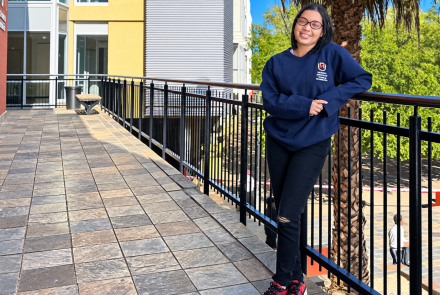


Dr-in-waiting...
Laurica Afrikaner, is making waves in the water sector!
In 2024, NUST recognised top-performing students in various disciplines through its full-time Prestigious Research Excellence Scholarships (PRES), valued at over two million Namibia dollars. This was the first time the University availed funds of this nature as part of the initiatives funded through the Institutional Research Publications Committee (IRPC). One of the beneficiaries was Laurica Celeste Afrikaner, who will be getting her PhD in Natural Resource Science at the May Graduation.
Laurica is set to make a powerful impact in the water sector. In addition to the PhD she will be receiving, she was newly appointed as Chief Hydrologist in the Ministry of Agriculture, Fisheries, Water and Land Reform.
She was recently interviewed by the NUST Brief.
NUST Brief (NB): What does receiving the PRES scholarship mean to you?
Laurica Celeste Afrikaner (LCA): Receiving the PRES scholarship was such an honour and I am truly humbled by being recognised. It affirmed the relevance of my research within the water sector and strengthened my commitment to contributing scientifically grounded solutions to Namibia’s groundwater management challenges. Having dedicated funding for my studies was truly a blessing, as it allowed me to focus fully on my research without financial constraints. It was particularly valuable in supporting publication efforts and enabling participation in conferences, where my work could be shared and refined through engagement with the broader scientific community.
NB: What is the focus of your PhD research?
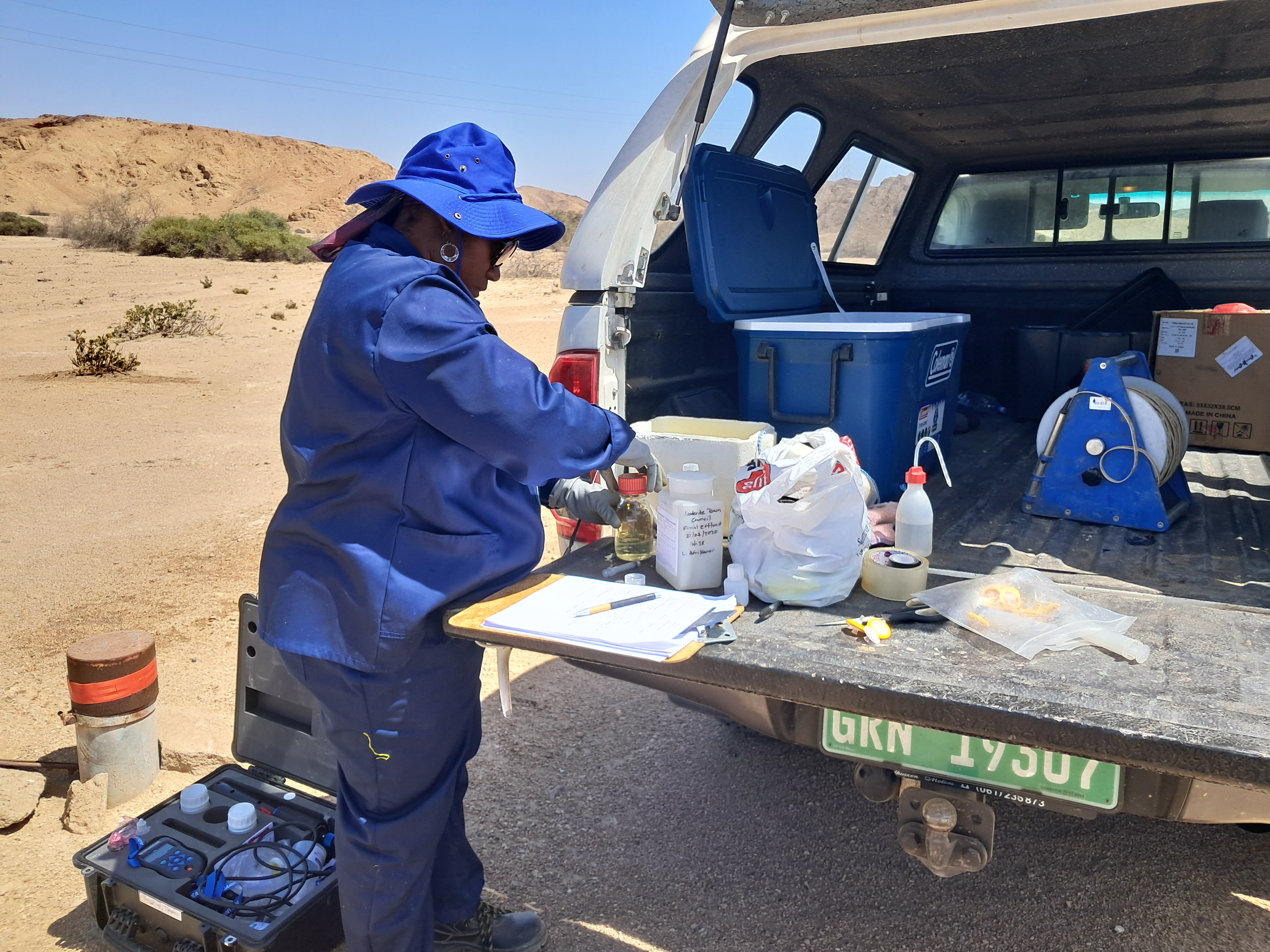
LCA: My doctoral research examined the hydrochemical, isotopic, and radiological characteristics of groundwater in Namibia’s uranium mining region. It integrated trace metal analysis, stable isotope techniques, and long-term groundwater monitoring to assess spatio-temporal variations in groundwater quality. The study contributed to an improved understanding of groundwater processes in arid environments, supported the sustainable use of aquifers, and provided a scientific baseline for groundwater management in mining-impacted areas. The findings are particularly relevant for informing evidence-based decision-making and strengthening regulatory approaches to water resource protection in water-scarce regions.
NB: How did NUST prepare you for your role as Chief Hydrologist?
LCA: NUST provided a strong foundation in applied hydrology, research methodologies, and analytical thinking, which are directly aligned with the responsibilities of a Chief Hydrologist. The training equipped me with the technical skills to lead water quality monitoring programmes, manage and interpret complex datasets for compliance, and provide guidance on water treatment technologies.
While my programme was largely research-based, I benefited from targeted academic writing workshops and trainings, which strengthened my ability to produce scientific articles. These skills are valuable in supporting the Ministry’s decision-making processes and in providing informed advice to stakeholders on appropriate water treatment systems.
In addition, NUST helped develop my ability to engage with regulatory frameworks, contribute to policy and environmental assessments, and collaborate effectively with stakeholders. It also enhanced my leadership and supervisory capacity, enabling me to manage teams, oversee projects and technical evaluations, and represent the Division at national and regional platforms.
NB: What challenges have you encountered in your academic and professional journey in the water sector, and how have you overcome them?
LCA: One of the key challenges has been access to critical data, particularly from industry stakeholders, which can limit research outputs. I have addressed this through persistence, building professional relationships, and adapting my research approach to maximise the use of available data while maintaining scientific integrity.
NB: As you transition from doctoral studies into a senior leadership role, what are your key priorities?
LCA: My priorities include strengthening evidence-based decision-making in water resource management, improving water quality monitoring systems (both groundwater and surface water), enhancing collaboration between government and industry, and ensuring sustainable water use in the face of increasing environmental pressures. In addition, I aim to improve research outputs within the Department of Water Resources Management by promoting the production of more scientific articles in collaboration with universities, which can further inform regulatory decision-making and strengthen our role as evidence-based regulators.
NB: What message would you like to share with PhD candidates who are on the verge of giving up?
LCA: The PhD journey is demanding, but persistence is key. Progress is not always linear, and setbacks are part of the process. Stay focused on your purpose, remain adaptable, and remember that completing the journey is as much about resilience as it is about academic ability. A PhD journey does not need to be a solo journey; it is important to build a strong network around you. Having people with whom you can share ideas, challenges, and seek guidance is essential for progress and balance.
In my own experience, I had a “village” of support that I could rely on during difficult moments. I am particularly grateful to my fellow PhD students from the SASSCAL graduate programme, as well as the support from the Directorate of Research, Innovation and Partnerships (DRIP), whose encouragement and assistance made this journey more manageable. Their support played a significant role in making this academic path more achievable and less isolating.