

Igniting Namibia’s Green Hydrogen Dream: The Science of Building a National TVET Workforce in Green Hydrogen
Namibia’s ambition to become a global leader in green hydrogen (GH2) hinges not only on its abundant sun and wind, but also on its people. The Innovating Green Networks through Industry and TVET Empowerment for Green Hydrogen (IGNITE GH2) project, funded by the European Union (EU) through a €2 million investment and led by the Technical and Vocational Education and Training Department at the Namibia University of Science and Technology (NUST), is Namibia’s strategic response to addressing the skills deficit in this emerging sector.
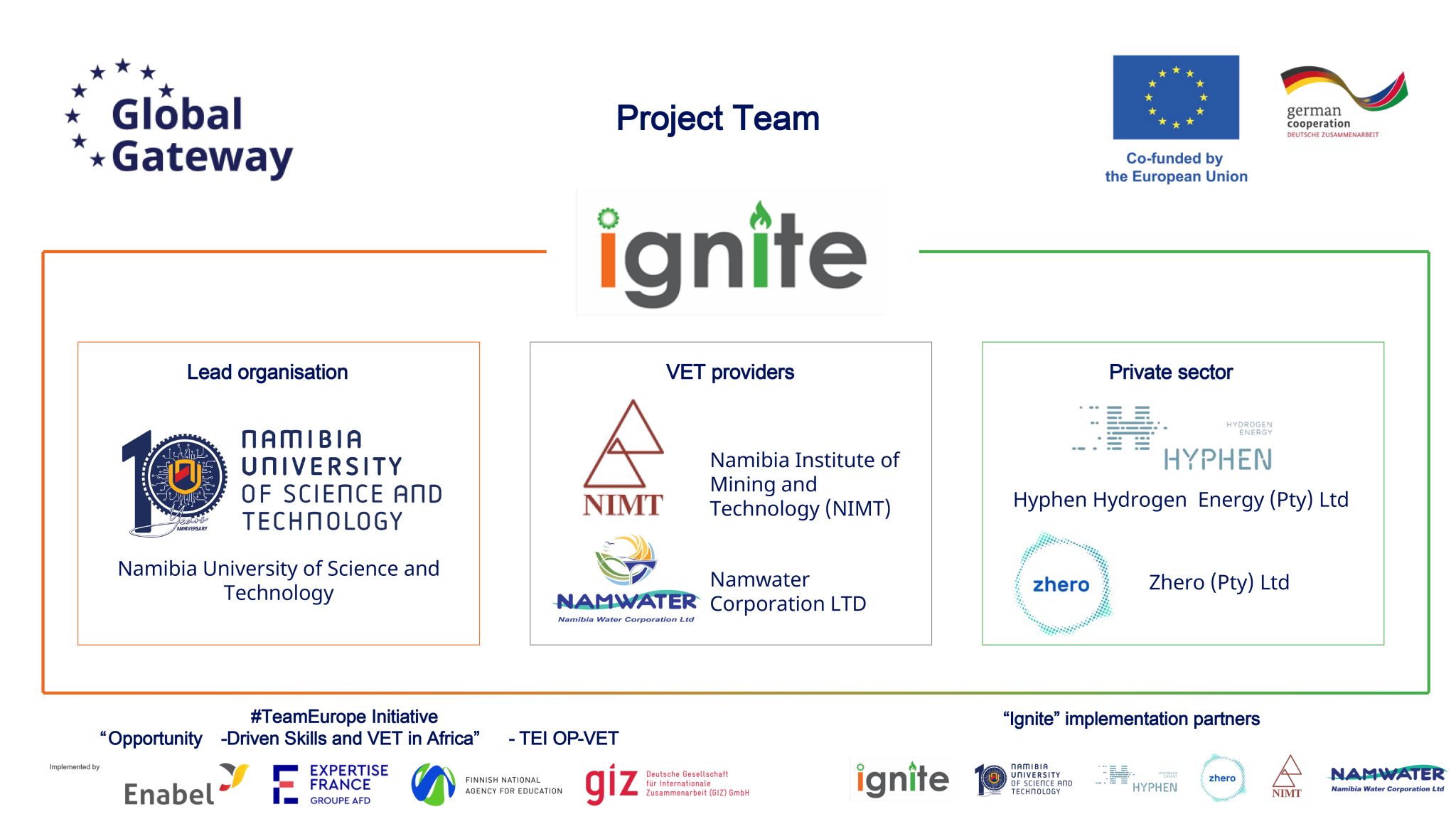
The IGNITE GH2 project is anchored in the Opportunity-driven Skills and Vocational Education and Training (OP-VET) approach to support national imperatives, aligning vocational training with concrete employment opportunities fuelled by public and private investment. Its consortium brings together two private companies driving Namibia’s green hydrogen ambitions, Hyphen Hydrogen Energy (Pty) Ltd and Zhero Molecules Walvis Bay (Pty) Ltd, as well as two key training institutions, the Namibia Institute of Mining and Technology (NIMT) and NamWater Corporation Ltd. Through this public–private partnership, the project will ensure that TVET programmes are directly responsive to market demands. It will further support the establishment of the Keetmanshoop Vocational Training Centre as a Centre of Excellence (CoE) for Green Hydrogen within the Southern Hub, while complementing and strengthening existing initiatives such as the Daures Green Hydrogen Village, the HyIron project, and Cleanergy Solutions to prevent duplication.
Historically, many TVET graduates have faced a “glass ceiling” at Level 3 of the National Qualifications Framework (NQF), limiting upward mobility into technician roles at NQF Level 5 and beyond. The TVET Department at NUST is addressing this challenge by developing NQF Level 7 and 8 qualifications and specialised short courses in green hydrogen-related occupations. This approach builds the capacity of trainers to deliver programmes up to NQF Level 6 and ensures long-term sustainability within the training system.
The project is also investing in modern equipment and facilities for both training and applied research. Trainees will receive hands-on training in solar and hydrogen technologies, linking classroom learning with real industry practice. This deliberate and scientific approach ensures the quality and sustainability of future training in high-demand areas such as Solar Installation and Maintenance with Battery Energy Storage Systems (BESS), Industrial Plumbing and Pipefitting, Water and Wastewater Treatment, Civil Construction Engineering, Instrumentation and Supervisory Control and Data Acquisition (SCADA), and Heavy Plant Operation.
Central to this initiative is the collaboration between the TVET Department at NUST and the Namibia Training Authority (NTA), the national regulator responsible for quality assurance and occupational standards. This partnership ensures that qualifications and training pathways developed under IGNITE GH2 meet national requirements, align with industry expectations, and strengthen the long-term sustainability of Namibia’s TVET system.
The value proposition is clear: reverse-engineer the workforce. Through IGNITE GH2, Namibia’s TVET system will be strengthened by upskilling and reskilling 685 unemployed graduates and training 40 instructors. This targeted investment will help close a critical skills gap and ensure that local workers are equipped to take up the thousands of jobs expected from Namibia’s green energy expansion.
IGNITE GH2 reinforces Namibia’s vision of becoming a global green hydrogen leader. It aligns with national priorities outlined in the Green Hydrogen Strategy and the forthcoming National Development Plan 6 (NDP6), both of which emphasise sustainable economic growth and employment creation. Namibia’s green hydrogen sector has the potential to generate tens of thousands of jobs by 2040, an opportunity that can only be realised if the workforce is adequately prepared. As more Namibians acquire specialised skills, communities will benefit from reduced unemployment, improved livelihoods, and increased entrepreneurship.
Ultimately, IGNITE GH2 is more than an education initiative; it is a catalyst igniting Namibia’s greener, more prosperous future.