

There’s More to Food Than What’s on Your Plate
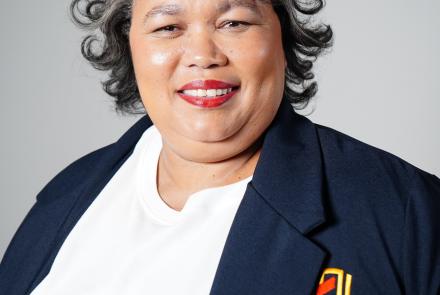
We rarely stop to think about what happens to our food before it lands on our plates. For Shange-Ndamona Mungoba, however, that question has been at the heart of her career.
Her work has taken her through different parts of Namibia’s food industry, from food production and safety to quality management and agricultural value chains. Along the way, she has seen first-hand how much goes on behind the scenes to make sure the food we consume is safe, reliable and produced through systems that can keep up with change.
But her experience also taught her something else. Knowing how to spot a problem does not always mean knowing how to bring the right people together to fix it. For Mungoba, that realisation changed the way she viewed her work and, ultimately, the direction of her professional journey.
Already established as a Food Science Technologist and Food Systems Specialist, Mungoba chose to expand beyond the technical side of the profession by pursuing a Master of Leadership and Change Management (NQF Level 9) at NUST.
Through the Harold Pupkewitz Graduate School of Business, the journey opened up a different way of looking at familiar challenges. “Leadership is not simply about directing people or occupying a position of authority. It is about understanding people, navigating different perspectives, communicating effectively and helping organisations move through change,” Mungoba explained.
That lesson is particularly relevant in the food industry, where solving one challenge can require food scientists, farmers, engineers, business leaders, regulators and policymakers to work towards the same goal.
Mungoba’s professional experience within Namibia’s meat processing industry, combined with consultancy work in food production and agricultural initiatives, has provided a practical foundation for applying these lessons. “My Master’s degree affords me the ability to approach technical challenges through a leadership and organisational lens,” she elaborated.
As Mungoba graduates, her next chapter will focus on combining science and leadership, technical expertise and people, and knowledge and action. Her ultimate goal is to contribute to a food industry that is not only safe and productive, but innovative, resilient and sustainable. “Sometimes, creating better food systems is not only about knowing what needs to change. It is also about knowing how to bring people with you,” she said.