
Taking Namibia’s AI Story to Lagos, Nigeria
With delegates from 47 African countries gathered under one roof, the 8th annual Deep Learning Indaba provided a powerful platform for conversations about Africa’s role in the rapidly advancing world of artificial intelligence. Among the participants was the Namibia University of Science and Technology (NUST), contributing to discussions shaping the continent’s technological future.
Hosted by Pan-Atlantic University in Lagos, Nigeria, the Indaba centred on the theme “Sovereign Intelligence: Africa’s Path in a Frontier AI World.” From African Language AI to Geospatial AI (GeoAI), participants explored how Africa can develop and steward its own data, systems and scientific knowledge while building solutions that respond to local realities.
NUST Data Science Associate Professor, Prof Stephen Fashoto, was among the University’s standout contributors, receiving the prestigious Umuntu Prize in recognition of his role as one of the outstanding organisers under the IndabaX Central Steering Committee for Africa. The award reflects his contribution to fostering collaboration and advancing AI conversations across the continent.
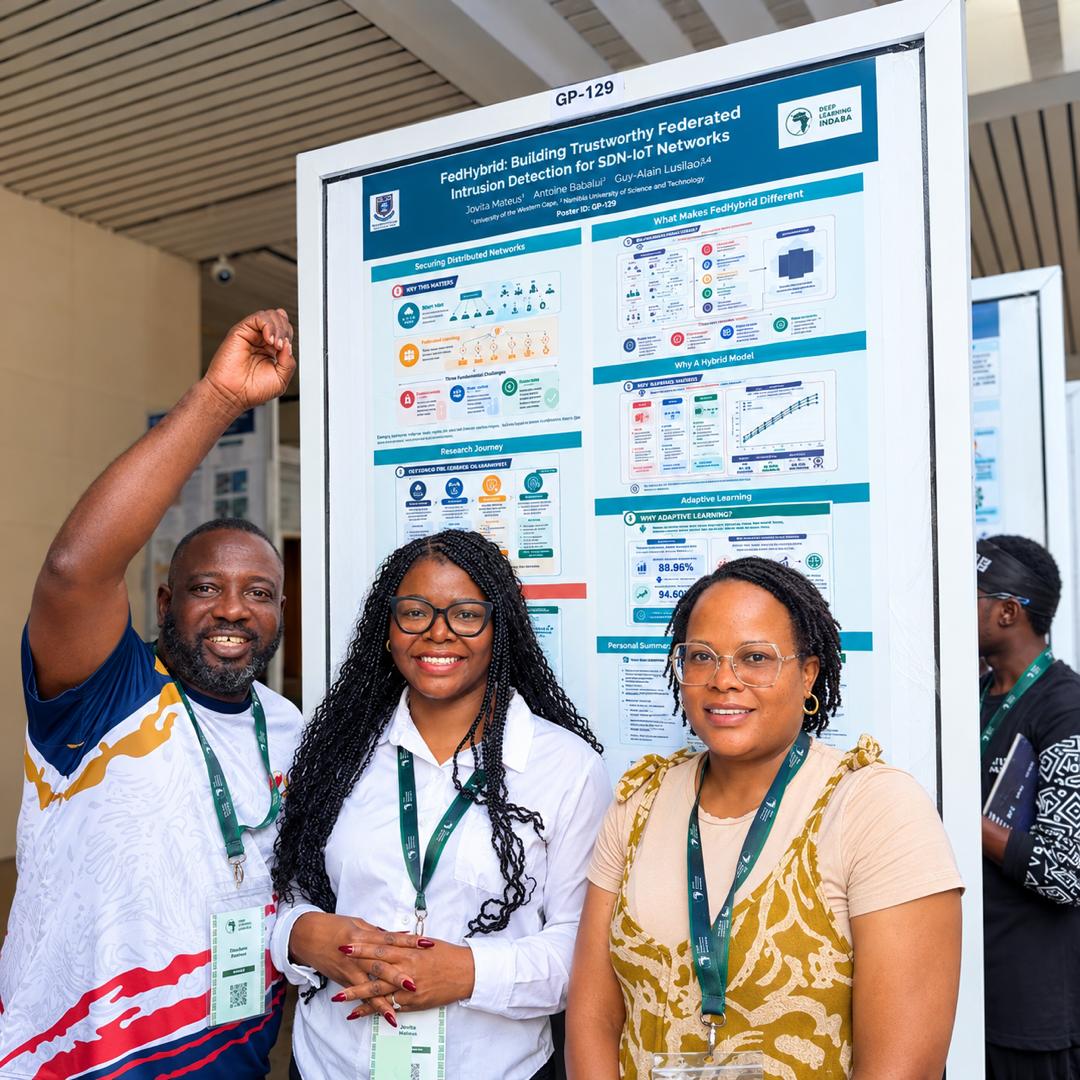
NUST’s research excellence was further highlighted by part-time lecturer Jovita Shiweda, who received the Best Poster Award for her research titled “FedHybrid: Building Trustworthy Federated Intrusion Detection for SDN-IoT Networks.” Her work emerged as the top poster among more than 200 submissions, demonstrating both technical innovation and relevance to Africa’s growing cybersecurity needs.
Shiweda explained that her research tackles a critical cybersecurity challenge by enabling attacks on connected devices to be detected “without centralising sensitive user data.” The approach highlights the potential of AI-driven solutions to strengthen cybersecurity while protecting data privacy.
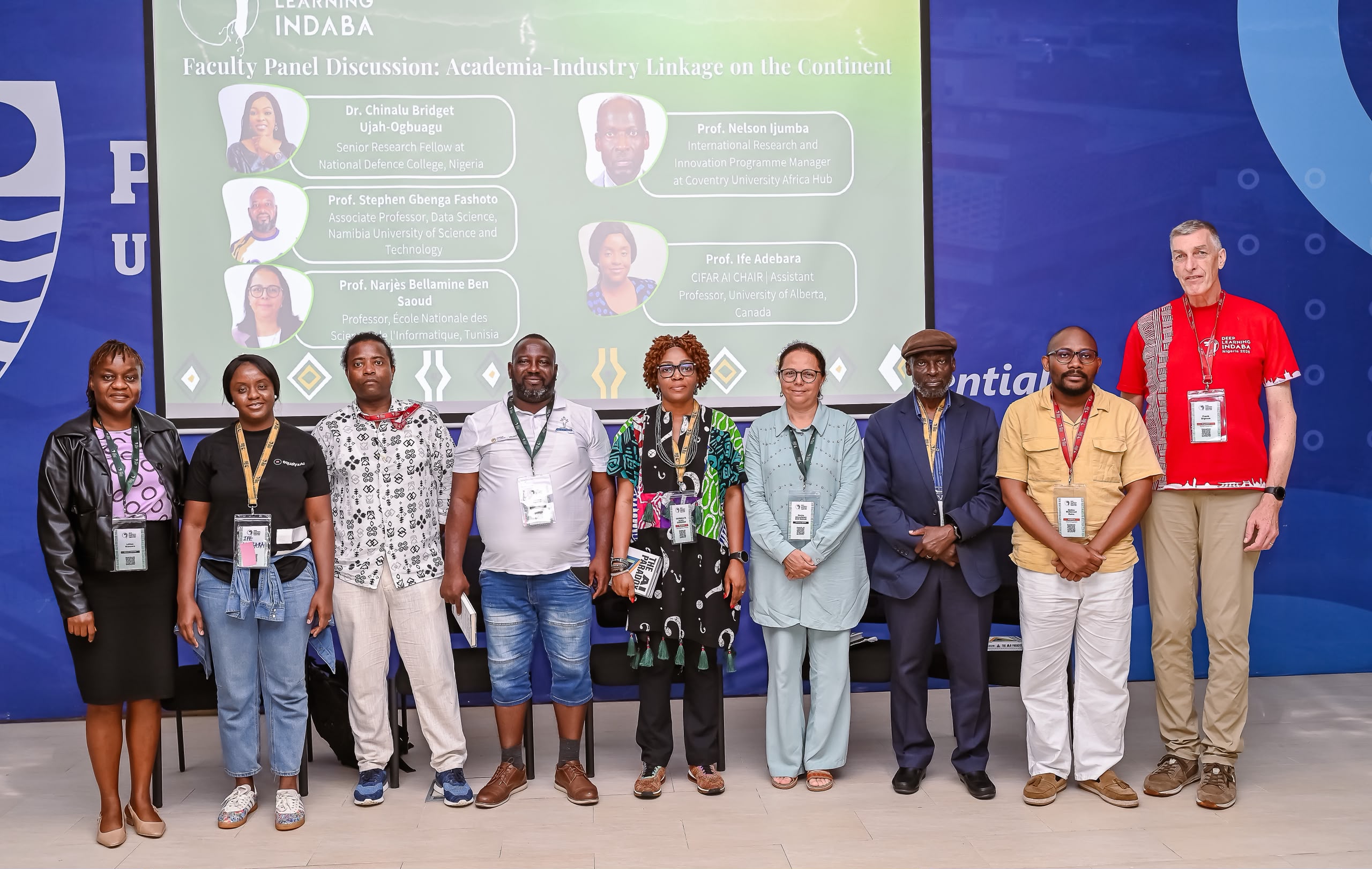
Prof Fashoto also contributed to a thought-provoking panel discussion on “Academia–Industry Linkages: Who Builds, Who Owns & Who Benefits?” The discussion examined how universities and industry can move beyond traditional partnerships to co-create solutions with meaningful societal impact.
Speaking about NUST’s approach, Prof Fashoto noted that industry experts are “not treated as occasional visitors but as essential partners in teaching.” He highlighted the Master’s in Data Science programme, where guest lecturers from industry regularly engage with students.
“This practice ensures that students do not perceive their coursework as abstract theory but as tools directly connected to real-world challenges,” he explained, adding that firsthand insights from practitioners help students understand how their knowledge can translate into solutions for pressing industry problems.
For Prof Fashoto, such collaboration is increasingly important in the AI era. “When industry opens its doors, academia can respond with innovation and together we build systems that benefit society at large.”
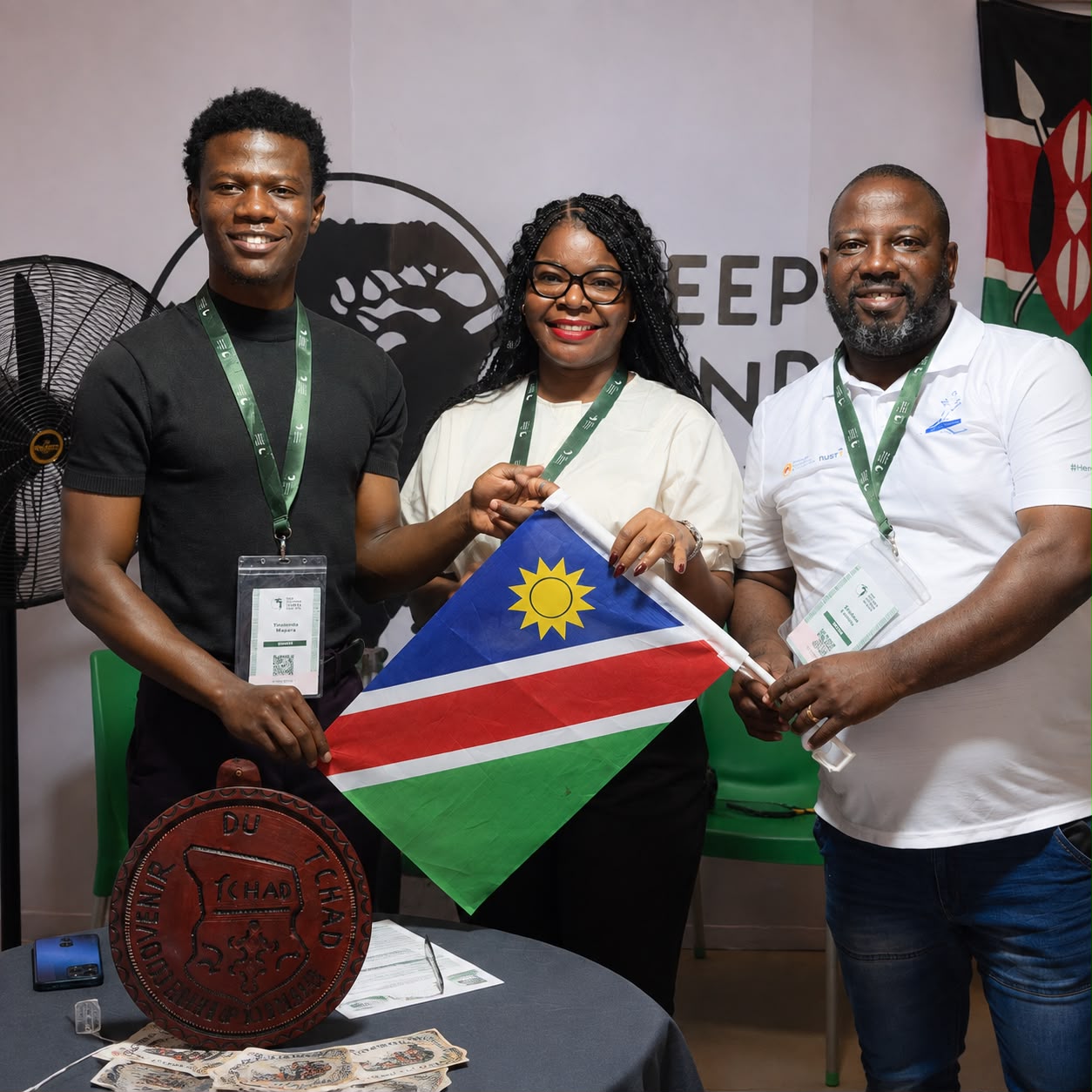
NUST’s participation and achievements at the Indaba demonstrate the University’s growing contribution to continental AI discourse and research. More importantly, the delegation showcased Namibia’s academic strength, collaborative spirit and readiness to contribute to an African digital future shaped by homegrown knowledge, innovation and technology.