


NUST Among Sponsors of 11th National ICT Summit and Hackathon
Committing to Namibia’s Digital Future
As Namibia navigates a rapidly evolving digital landscape, the question is no longer whether technology will transform the world of work, but whether people will be equipped to thrive in it.
“We must create pathways from learning, skills, to innovation, to enterprise, and ultimately to income and employment,” said the Minister of Information and Communication Technology, Hon Emma Theofelus. “That is the connection we must strive for.”
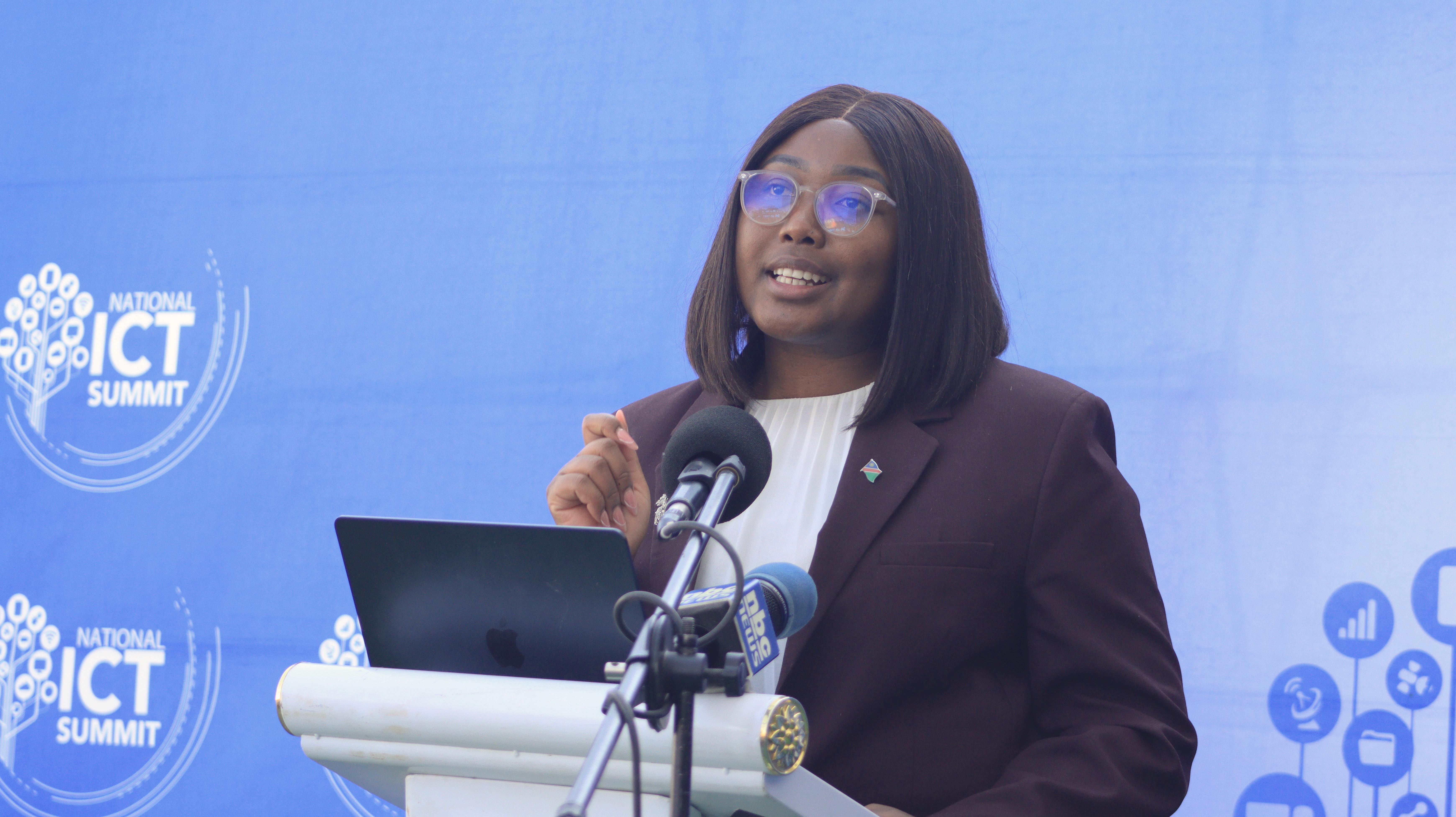
This vision closely aligns with NUST’s commitment to advancing science, technology, innovation, and skills development. The University is supporting the 11th National ICT Summit and Hackathon 2026 with a commitment of N$35 000, comprising a N$30 000 sponsorship package and academic and technical expertise valued at N$5 000.
Scheduled to take place in Ongwediva from 12 to 16 October 2026, the Summit provides a platform for the ICT industry, government, academia and other stakeholders to engage on emerging trends and challenges shaping the sector locally and globally. It also offers industry players an opportunity to showcase their ICT solutions and services.
Nashilongo Gervasius, the Director of Corporate Engagement and Internationalisation, represented the University at the sponsorship handover event. “In recognition of NUST’s mandate and expertise in science, technology, innovation and skills development, the University will support the Summit,” she said. She added that the commitment goes beyond financial support, incorporating the University’s intellectual and technical capacity.

NUST’s participation aligns with its strategic priorities in technology, innovation, research, skills development and national impact. The engagement further reinforces the University’s role in advancing ICT and digital transformation, cybersecurity, innovation and entrepreneurship, technology skills development, and youth and student innovation.
Closing the Summit, Minister Theofelus emphasised that the rapid evolution of technology requires societies to rethink how they prepare for the future of work. “Our responsibility, therefore, is not to protect the economy from the change, but rather to prepare our people to participate in that change,” Theofelus said.