
From Building Models to Building Knowledge: Elao Martin Bags His PhD
...From models to PhD
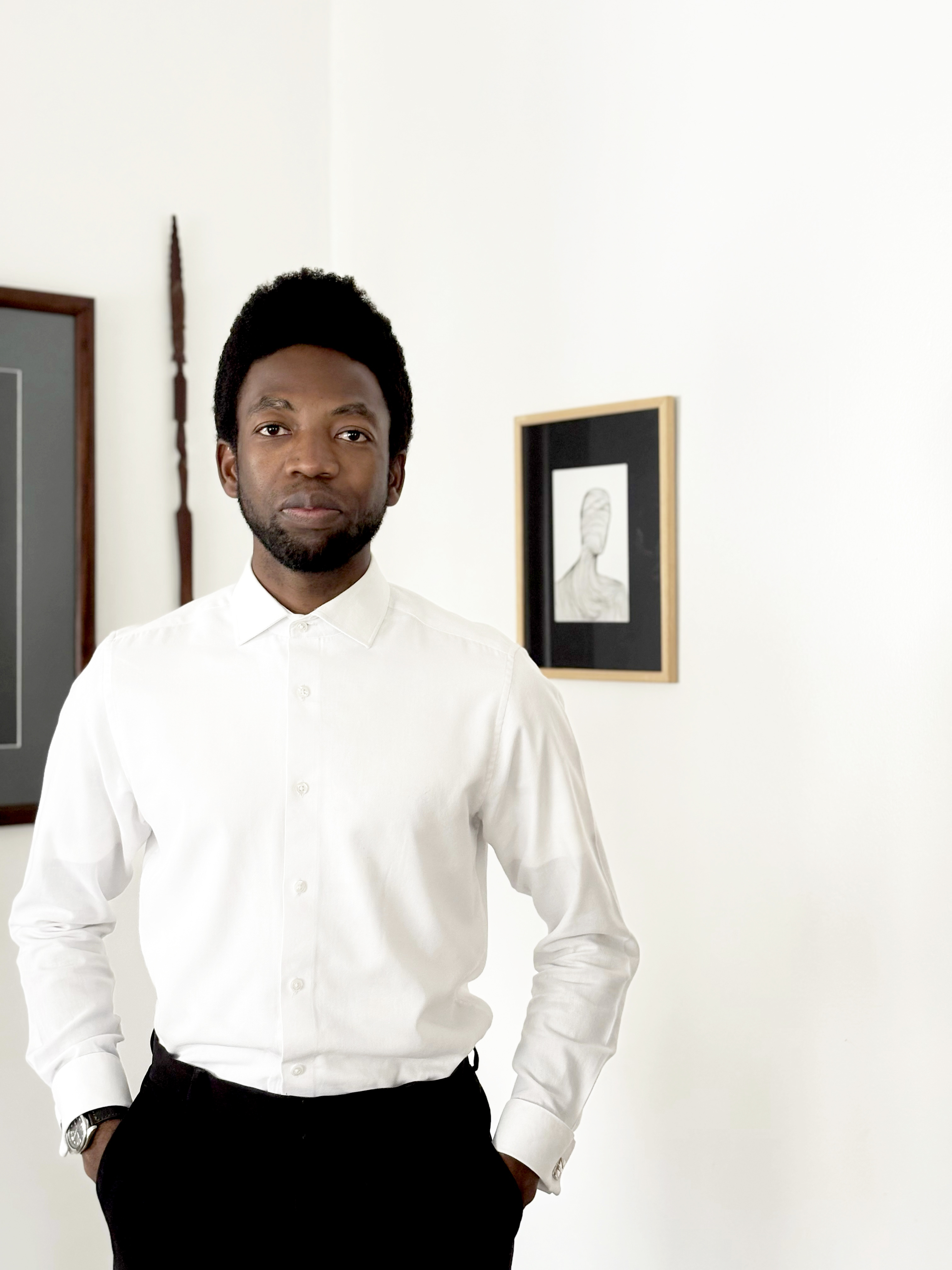
When Mr Elao Martin crosses the graduation stage this October, his NUST journey will come full circle. He first arrived as a young Architecture student finding his feet. Now, he is a PhD candidate and Staff Development Fellow, his potential nurtured by the same University where his journey began.
For Elao, the milestone represents an opportunity to bring a young Namibian voice into conversations about architecture and the communities it serves. “I’m excited to contribute local perspectives to my research areas, and to show how these can inform policy and praxis,” he said.
But long before the PhD, there was simply a curious boy fascinated by people, objects, and how the world around him worked. After school, Elao said he would build models of buildings he admired, wire cars, and interesting objects he had seen in magazines. As those models became more complex, the people around him began telling him what, perhaps, they had already recognised: he was born to be an architect.
Learning to ‘See’
Born in Oshakati, Elao moved to Windhoek with his mother for school. He narrated that his childhood was modest and filled with change as they moved often. “Looking back, I realise that this constant ‘resetting’ taught me to always make the most of where I am, to remain open to new possibilities, and to face change with optimism.”
Some of his fondest memories were remarkably ordinary: walking to school with his mother, talking about the city, cars and whatever caught his attention. Years later, arriving at NUST to study Architecture brought his childhood curiosity into focus.
“I was anxious to do well at something everyone around me felt I would be good at,” he recalled. He added that he loved the studio culture and worked to develop the skills of ‘seeing’ and ‘speaking’ architecture – tools that eventually helped him establish his own voice as a designer.
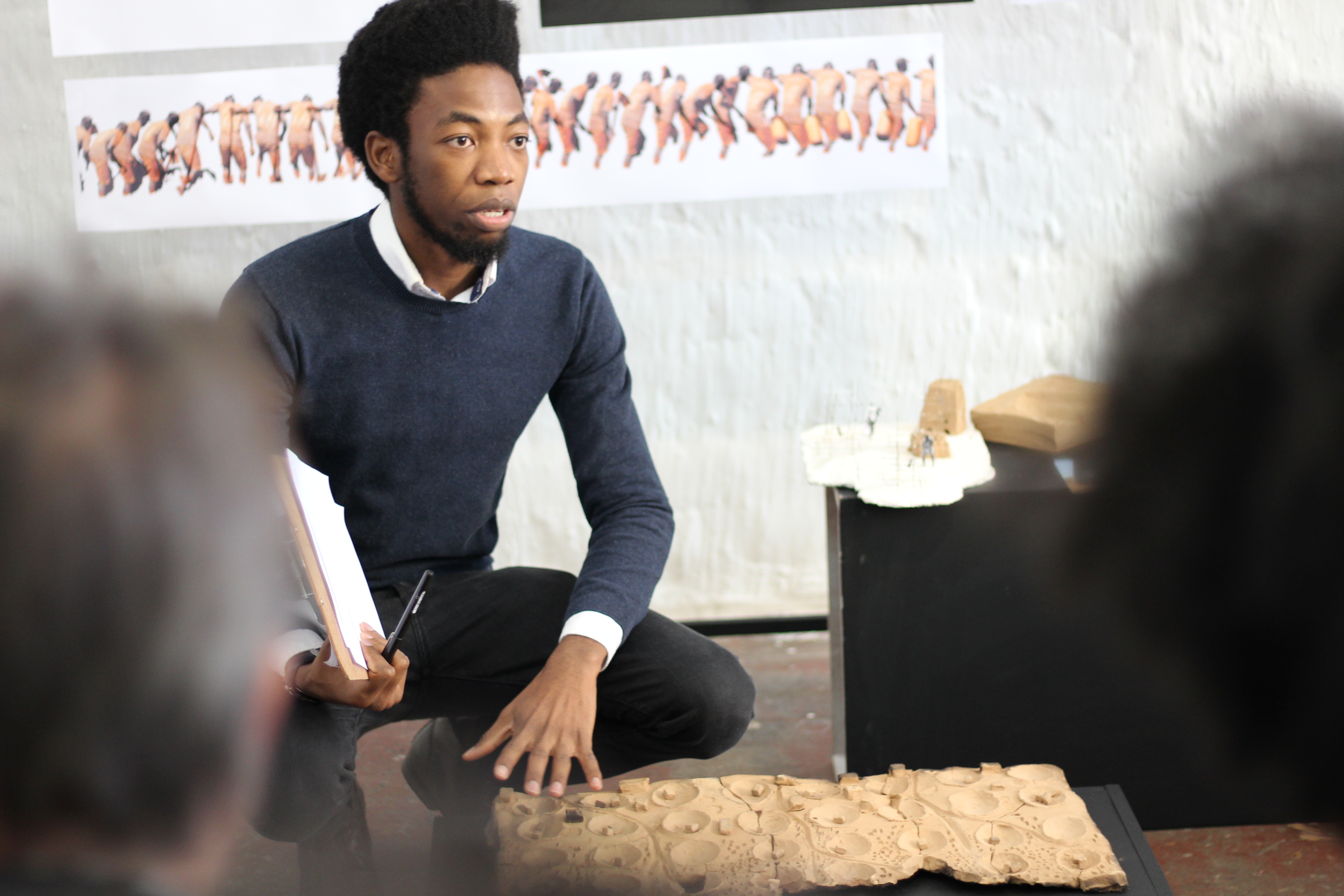
Elao Martin presenting at the Graduate School of Architecture, University of Johannesburg International Research Week.
Investing in Local Talent
After completing his Master’s Degree at the University of Johannesburg, Elao returned to NUST’s Department of Architecture, Planning and Construction in the Faculty of Engineering and the Built Environment as a guest lecturer. It was there that another opportunity opened.
He successfully applied to become a Staff Development Fellow through NUST’s Graduate Talent Acceleration Programme, an initiative aimed at developing local Namibian capacity in disciplines where recruiting staff with Master’s and doctoral qualifications is difficult. “NUST’s investment was central to me reaching this point,” Elao said.
The University contributed towards his doctoral studies through its Staff Development Fund, while a structured personal development plan guided his growth. Teaching alongside his studies also allowed him to bring emerging research ideas directly into the classroom. It was an investment not simply in one qualification, but in developing a Namibian academic who could teach, research, and practise within the field, he explained.
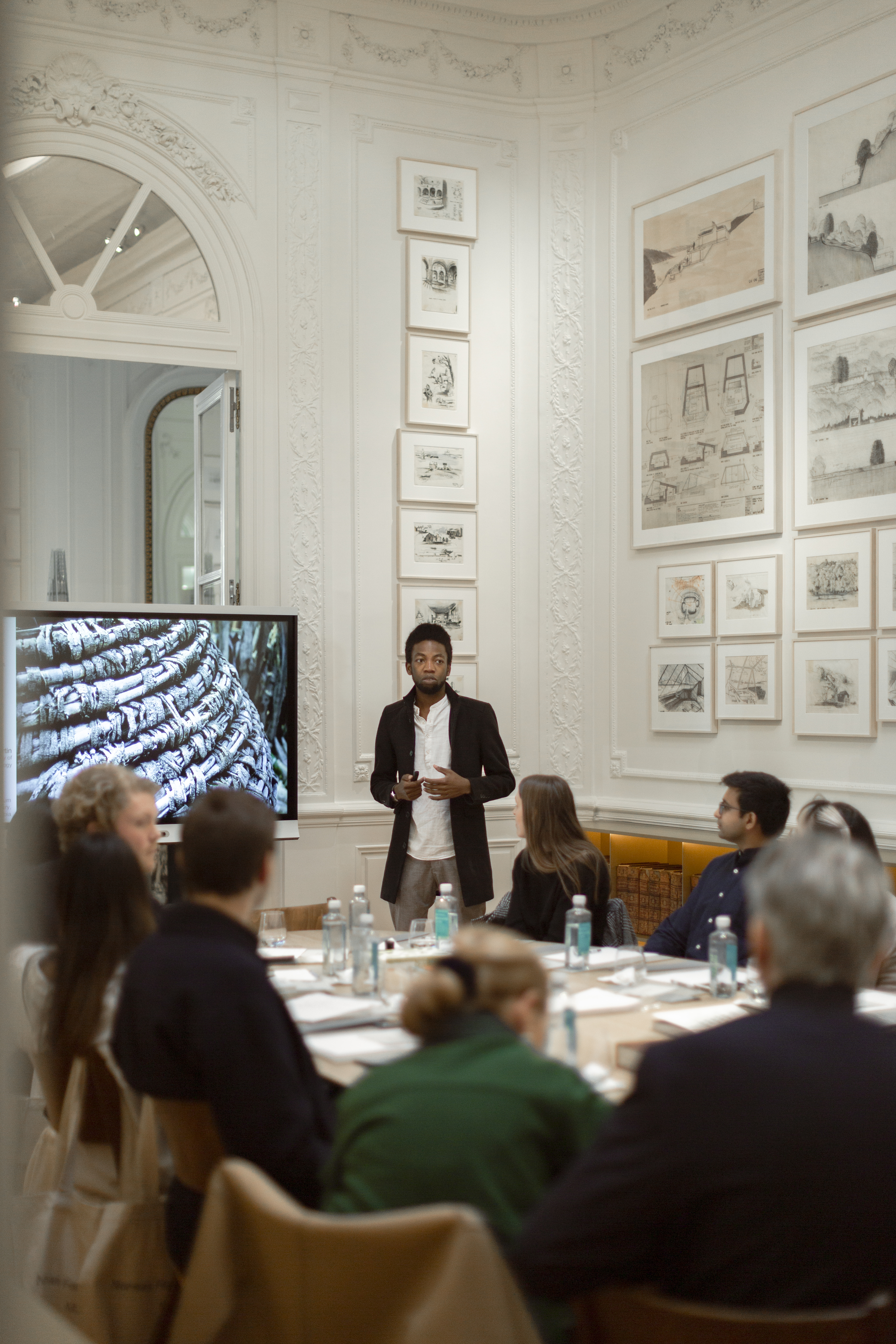
Elao Martin presenting at the Norman Foster Foundation’s Rematerialising Housing Workshop in Madrid, Spain.
‘An Endless Tunnel’
Describing the road to obtaining his PhD as “an extremely difficult undertaking”, Elao explained that he had to navigate doctoral research alongside teaching and the rigorous demands of becoming a registered professional architect. There were setbacks too, including having to rewrite his professional examination after an unsuccessful first attempt.
His research brought challenges of its own. One supervisor compared his choice of research design to “swiping a debit card without knowing the balance”, he recalled. “This sometimes felt like an endless tunnel with no light at the end of it,” Elao admitted.
But he persevered, adapting and refining his research methods until the theories and concepts emerged. His research examined the encroachment of urban land onto communal land through compensation regimes, using the Owambo homestead typology as a case study. Inspired by the ruins of homesteads he observed while travelling to northern Namibia, Elao explored what is lost when people are compensated and move away, and whether these processes could be made more equitable.
His findings challenge approaches that reduce the homestead to its physical infrastructure, instead positioning it as a complex system in which housing, livelihoods, and land rights intersect, he explained.
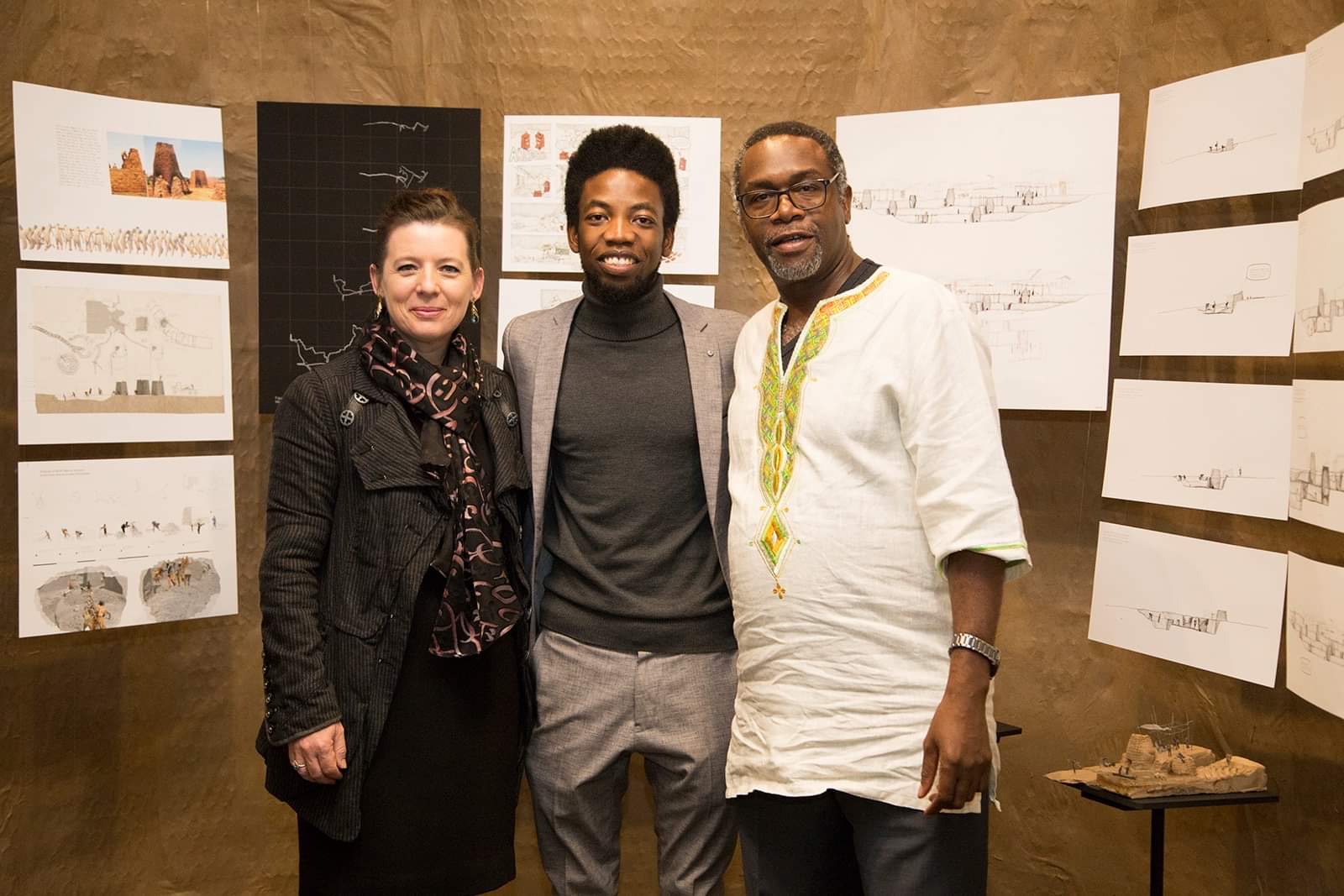
Elao Martin with Denise Fouché and Dr Finzi Saidi of the Graduate School of Architecture, University of Johannesburg, at the Corobrik Student of the Year Awards in Johannesburg.
Building What Comes Next
Looking back on the journey, Elao’s thoughts return to the people who helped him reach this point. “My mother has played an important role in my educational journey through her emotional and financial support,” he said. He also credits his Master’s and PhD supervisors with helping shape his research interests and refine his ideas, and his research participants, who “went above and beyond” to give his work the depth it required.
Now, he is looking beyond graduation. “I want to build a career that combines a strong professional, teaching and research portfolio,” he said.
But the next chapter he is building is also deeply personal. Elao shared that he recently became a father, and between homemaking, building toys and playtime with his son, he has discovered that architecture and fatherhood are shaping each other. “Being a father makes me more sensitive, patient and empathetic, which makes me a better all-round academic and architect,” he said.
And so, the boy who once built models of buildings is now building in different ways: a life with his young family, a career rooted in teaching and research, and an approach to architecture that responds to the realities of Namibia and its communities.