
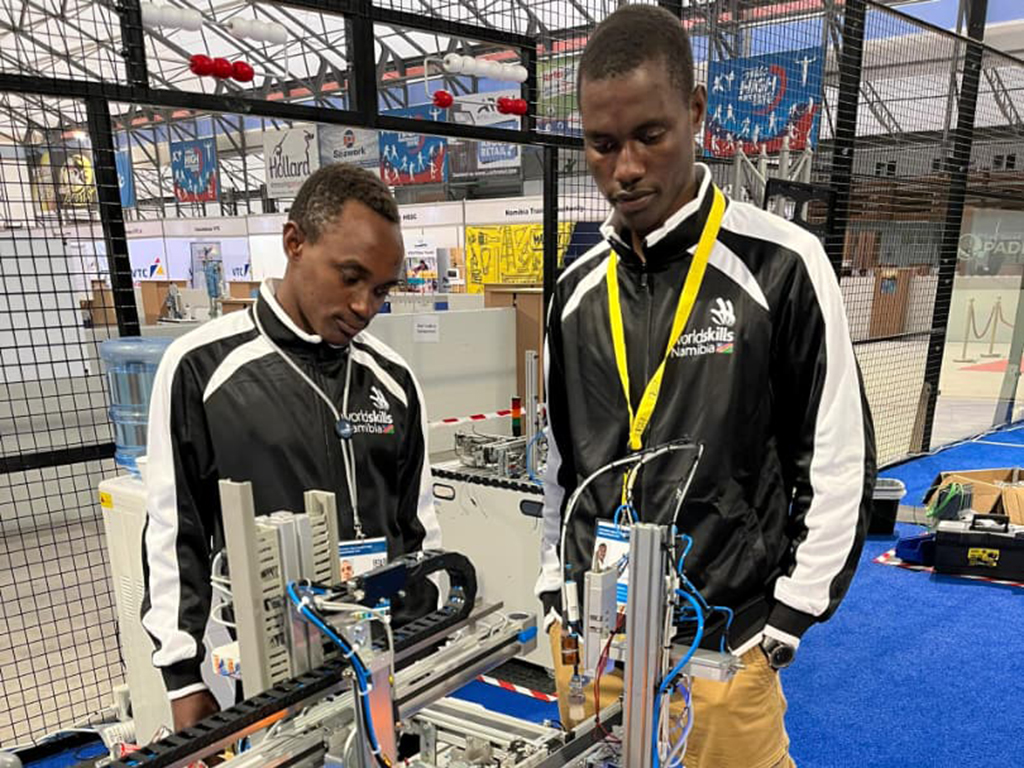
NUST Engineering Students Set to Compete at WorldSkills Competition
Three NUST students are preparing to take their technical skills to one of the world’s biggest stages for skills excellence, as they get ready to compete at the 48th WorldSkills Competition in Shanghai, China, from 22 to 27 September 2026.
The WorldSkills Competition is an international platform that brings together young professionals and skills competitors from across the world to showcase excellence in technical and vocational skills. WorldSkills Namibia (WSN) serves as Namibia’s national platform for participating in this global movement. Established by the Namibia Training Authority (NTA) in 2016, the WSN Secretariat promotes the importance of technical and vocational skills excellence in Namibia and facilitates the country’s participation in international WorldSkills competitions.
Held under the theme “Shaping a Skills-Driven Future”, the international competition will bring together approximately 1400 young skilled professionals from 70 countries and regions, competing across 64 skills. Among them will be Mechanical Engineering student Joy Mbumba and Mechatronics competitors Phillemon Mengela and Victor Neshila, who will represent Namibia and NUST at the competition.
For the three students, reaching the international stage is the result of different journeys, but their stories share a common thread of curiosity, perseverance and a commitment to mastering their craft.
From Curiosity to Competition
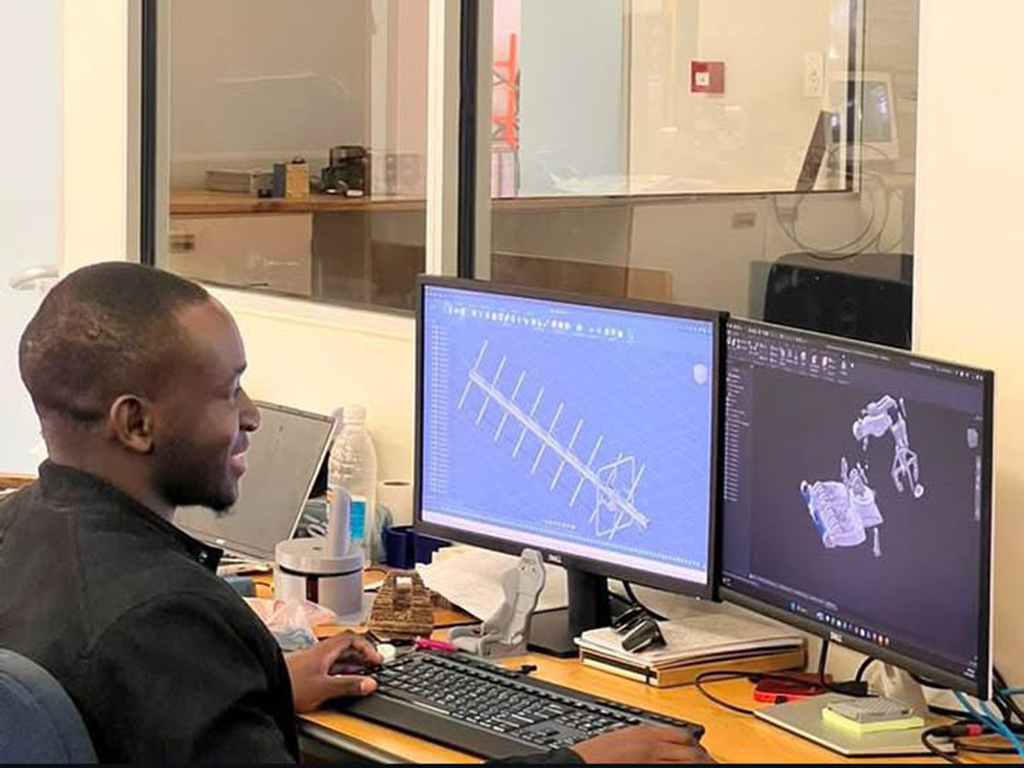
Joy’s interest in Mechanical Engineering was sparked by a fascination with how machines work and how engineering can be used to solve practical problems. His decision to study Mechanical Engineering at NUST allowed him to turn that curiosity into a career path.
“Seeing the impact of engineering on daily life inspired me to pursue this field and push my boundaries,” he says.
That mindset has remained central to his preparation for WorldSkills. Working closely with his trainer, Hijenduanao Uanivi, Joy has spent countless hours in the laboratory refining his technical skills, with particular attention to precision, speed and problem-solving under pressure. “We have been simulating competition scenarios to ensure I am completely ready for the tasks ahead,” he says.
Building Mastery Through Practice
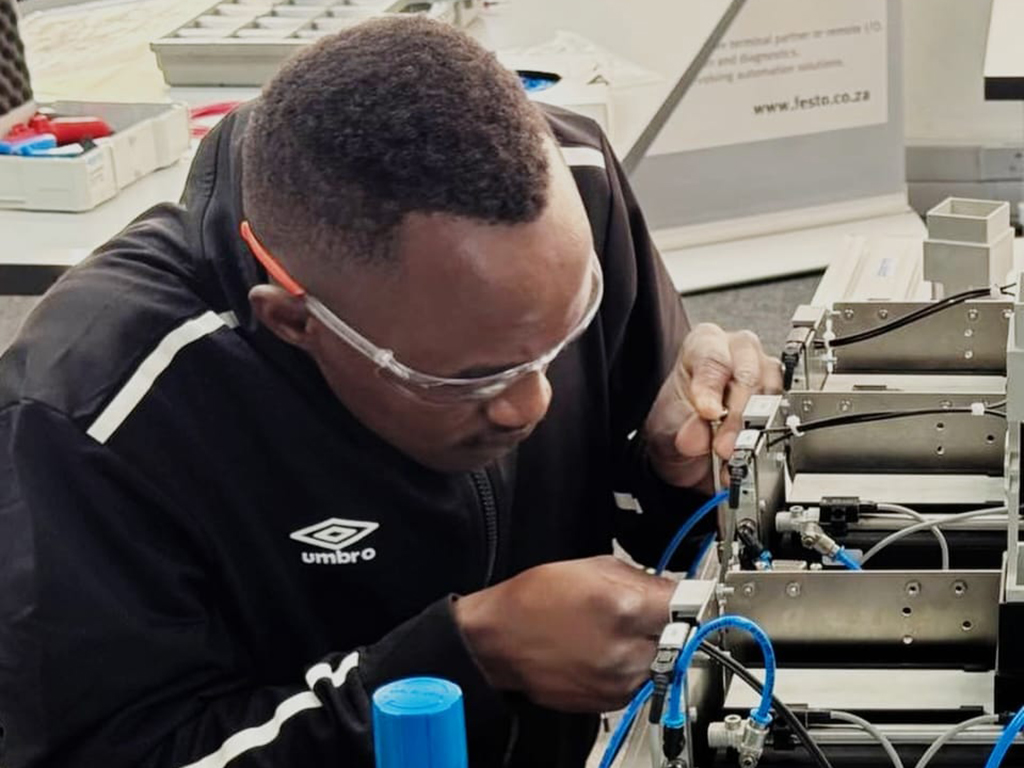
Phillemon’s journey into Mechatronics began with a fascination for turning complex ideas into functional machines. His interest developed into a passion for automation, robotics and problem-solving, supported by the guidance of his trainer, Valitel Ndemwiimba.
His preparation has involved extensive hands-on practice in Programmable Logic Controller (PLC) programming, electrical and pneumatic systems, as well as systematic troubleshooting under demanding conditions.
Winning gold at the 2025 WorldSkills national competition also gave Phillemon an important lesson about what it takes to compete at this level. “Mastery requires consistency, discipline, and attention to detail,” he says.
His focus has since been on improving both technical speed and mental resilience, ensuring that he can remain composed while working under the intense conditions of an international competition.
An Unexpected Route into Mechatronics
Victor’s path to the WorldSkills stage has been somewhat different.
He enrolled at NUST in 2021 to study for a Bachelors in Electrical Power Engineering, which he completed in 2025. During his final year, a high-school friend encouraged him to partner in the national Mechatronics competition, believing that Victor’s programming knowledge could give them an advantage.
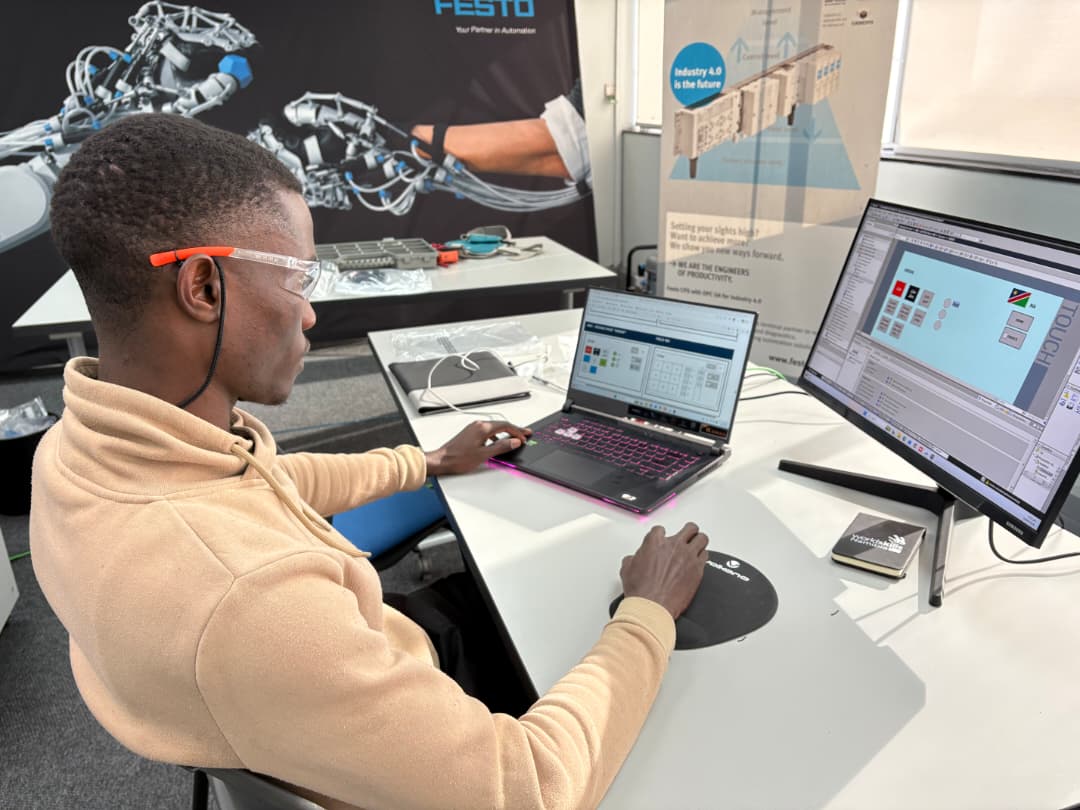
At that stage, Victor had experience mainly with programming simulations and had not yet worked extensively with physical PLCs or automation systems. He decided to take the opportunity. “I love automation and that was the driving factor that pushed me to go for it,” Victor says, adding that the rapid shift towards automation also convinced him that Mechatronics was an area in which he wanted to develop further.
As the competition approaches, Victor and his fellow competitors have been working through past test projects, building and programming systems to prepare for the challenges they may encounter in Shanghai. Still, he acknowledges that preparation can only go so far. “No one is ever 100% ready, so all I can say is, we will be there, and we will represent.”
More Than a Competition
For all three students, representing Namibia and NUST carries significance beyond their individual performance.
Joy describes it as both an honour and a responsibility, saying that competing internationally provides an opportunity to demonstrate that Namibia and NUST can produce highly skilled technical talent.
Phillemon similarly sees his participation as an opportunity to demonstrate the capabilities of Namibian youth. “Standing among the best in the world as a NUST student proves that Namibian youth possess world-class capability,” he says.
For Victor, the experience is also about what happens after the competition. He hopes to bring back knowledge and exposure that can contribute to developing more expertise in industrial automation in Namibia. “There are people out there in universities and VTCs that wish they can learn industrial Automation, but we have a limited number of experienced professionals in the country,” he says. “I'm looking forward to increasing that number of experienced individuals that will be able to train and mentor the others.”
Ready for Shanghai
As the 22 September opening of the WorldSkills Competition approaches, the three students will soon move from months of preparation to the competition floor, where their technical ability, precision, resilience and problem-solving skills will be tested alongside some of the best young professionals in the world.
Whatever the outcome, their participation already reflects the growing importance of technical and vocational skills in shaping the future of work, and the role young NUSTodians can play in that future.