
NUST’s NJLLCS Gains International Accreditation
...Elevating Namibian Scholarship
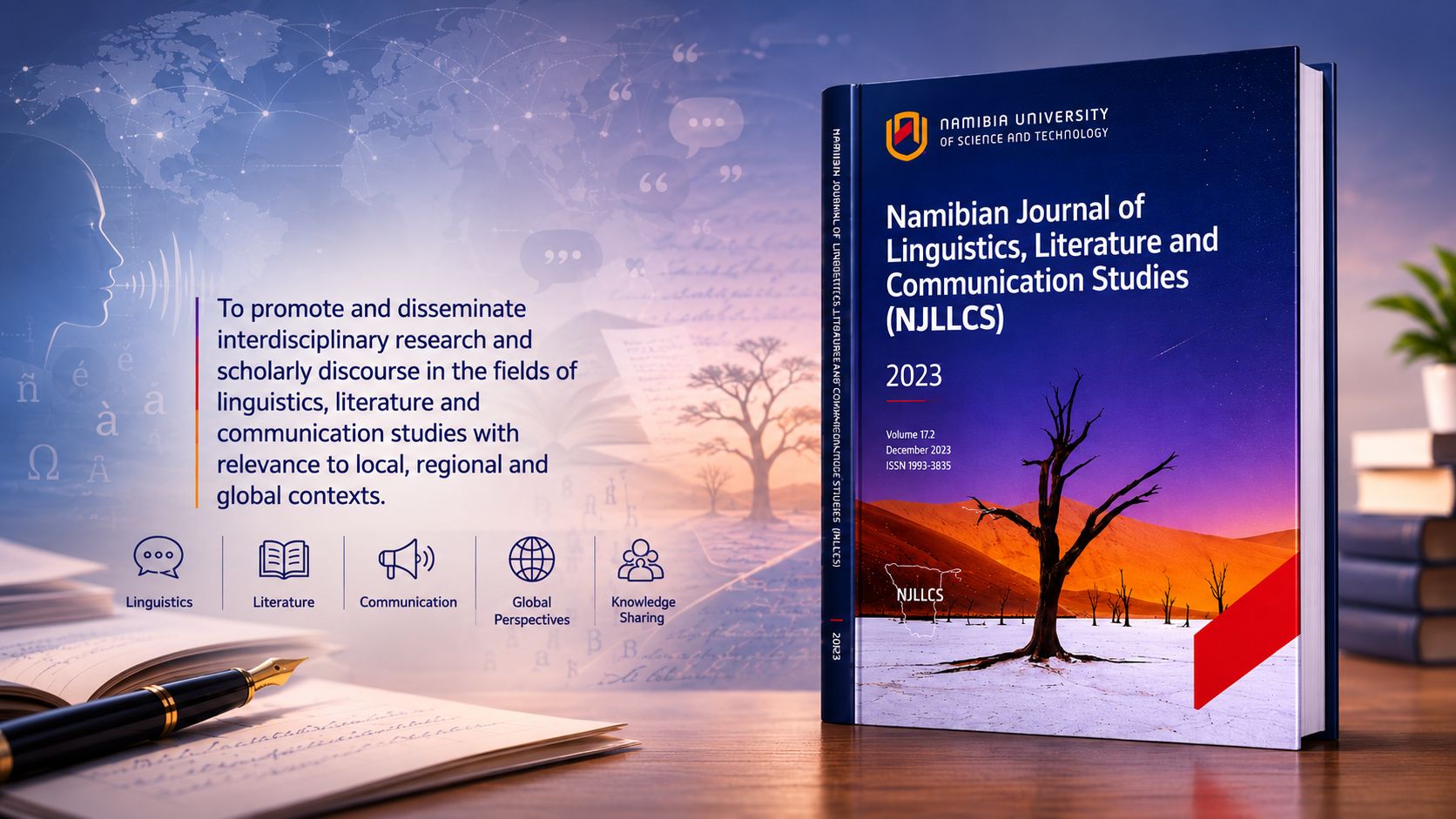
The Namibian Journal of Linguistics, Literature and Communication Studies (NJLLCS) have earned a distinction following its accreditation by the Directory of Open Access Journals (DOAJ). This international recognition marks a proud milestone not only for NUST, but also for Namibia’s broader research community, affirming the growing quality, credibility and global visibility of scholarship produced in the country.
Formerly known as the NAWA Journal of Language and Communication, which was indexed by EBSCOHOST, the journal is published bi-annually in the Faculty of Commerce, Human Sciences and Education. As a double-blind, peer-reviewed, open-access journal, NJLLCS is dedicated to advancing knowledge in language, literature and communication, while creating space for transdisciplinary dialogue across these fields.
Its academic vision is both timely and globally relevant. The journal explores how meaning is constructed, conveyed and interpreted across cultures, eras and media platforms, with particular interest in the intersections between Literary Studies, Applied Linguistics and Communication Studies. It welcomes original research, theoretical essays, systematic reviews and critical case studies, covering areas such as comparative literature, discourse analysis, sociolinguistics, digital communication, media studies, African and Namibian oral literature, rhetoric, translation, and intercultural communication.
The DOAJ accreditation affirms the journal’s editorial quality, scholarly rigour and international relevance. More importantly, it strengthens the visibility of Namibian research and creates new opportunities for local scholarship to contribute to global debates on language, narrative, media and society.
This milestone reflects vision, persistence and collective effort. Special commendation goes to the Department of Communication and Languages, Chief Editor Prof Woldemariam, and the NUST Library for their leadership and unwavering support. It is a powerful affirmation that scholarship produced in Namibia can shape conversations far beyond its borders.
To view the journal, click here.