
Innovation and Entrepreneurship Week Explores New Pathways to Graduate Success
For five days, the High-Tech Transfer Plaza Select became a hub of creativity, collaboration and innovation as NUST hosted the Innovation and Entrepreneurship Week. The event brought together students, researchers, innovators and partners to explore how ideas can be developed into solutions with real-world impact.
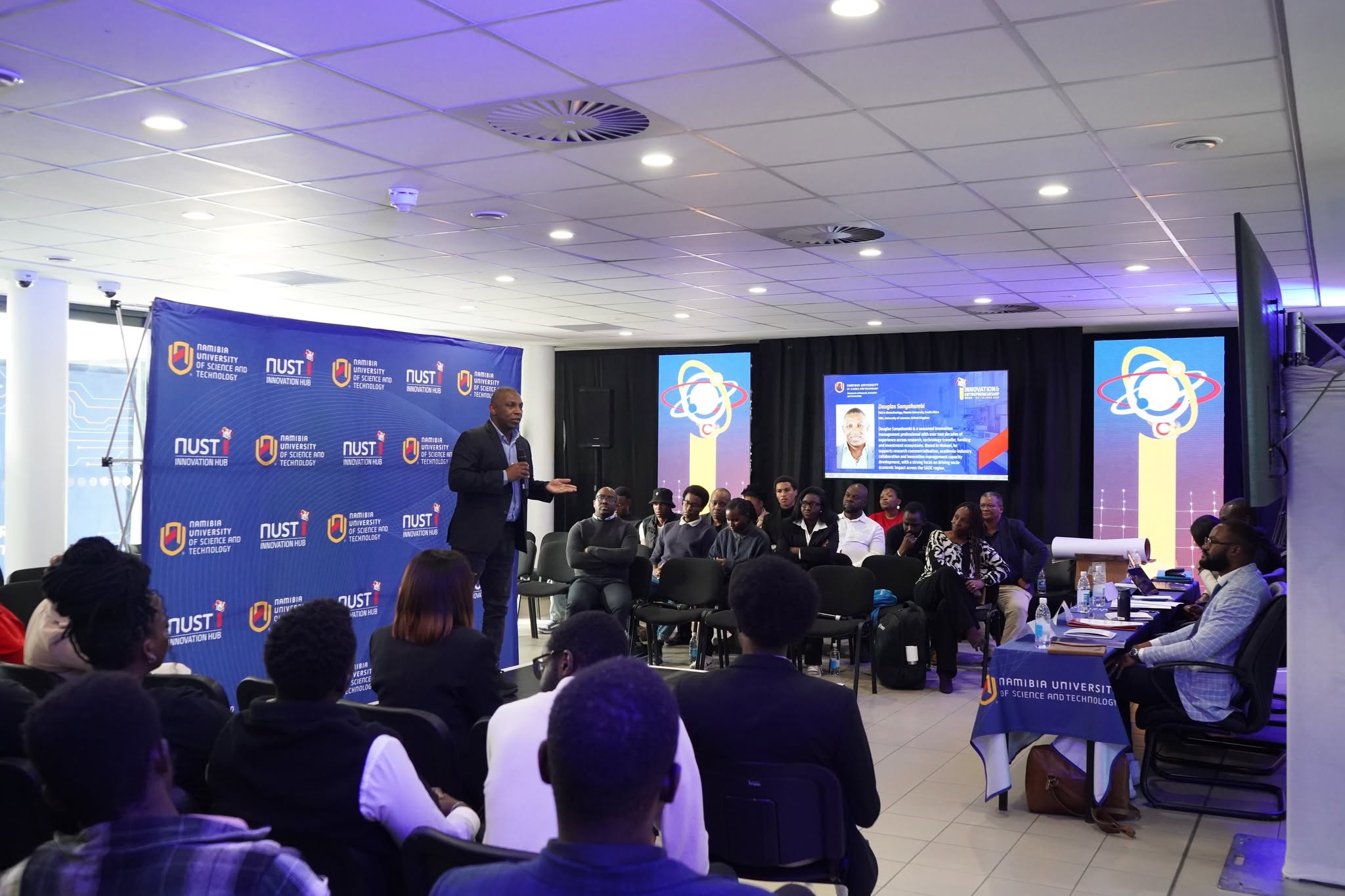
The last day of the event shifted the conversation to the human side of innovation, graduates, skills, enterprise and the systems needed to connect learning to opportunity. Through the UNIICo-create Stakeholder Engagement, universities, government, industry and development partners reflected on how co-creation can strengthen graduate employability and enterprise development.
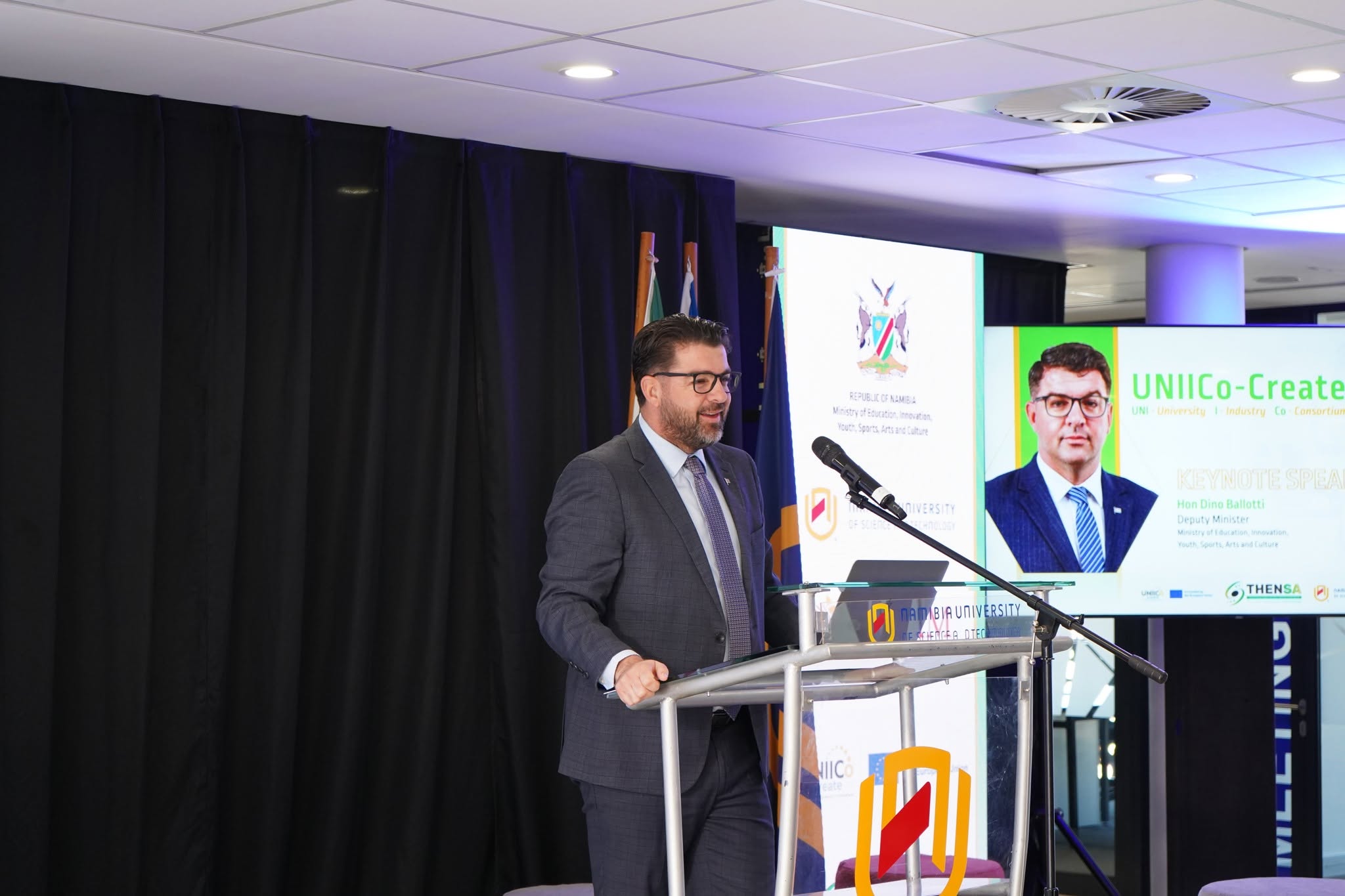
Delivering the keynote address, Hon Dino Ballotti, Deputy Minister from the Ministry of Education, Innovation, Youth, Sports, Arts and Culture, challenged institutions to think more intentionally about entrepreneurship as part of the student journey. As he noted, “We resource what we prioritise.” He further reminded the room that the goal is not only for students to walk across the graduation stage with a CV, but also with the confidence, skills and tools to create opportunities.
The panel discussion moved this conversation from policy to practice. From an industry point of view, John Ekongo, Corporate Affairs Manager at MTC Namibia, pointed to funding and meaningful work-integrated learning as critical parts of preparing graduates for the world of work. Jerome !Nanuseb, NUST SRC President, reminded the room that from a student’s perspective, the challenge is not only academic knowledge, but the transition between the lecture room and the workplace. These reflections brought the purpose of UNIICo-create into sharper focus, revealing that universities cannot only consult industry at the end of the process. They must co-create with industry, government and students from the beginning.
As the discussions highlighted, graduate employability is not created at graduation. Rather, it is built through relevant curricula, practical exposure, entrepreneurial thinking, industry participation and stronger institutional partnerships.