
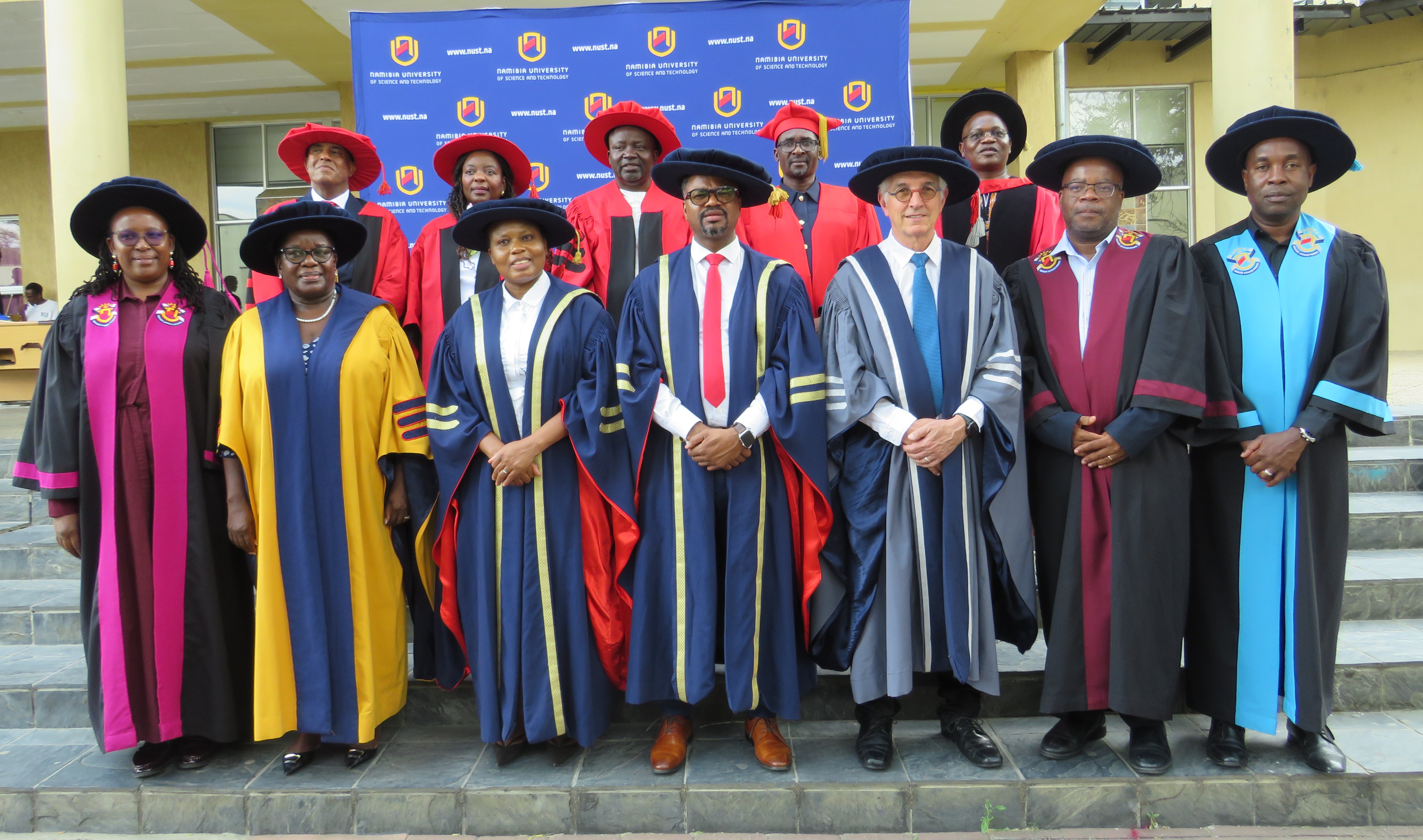
NUST inaugurates five professors advancing research for Namibia
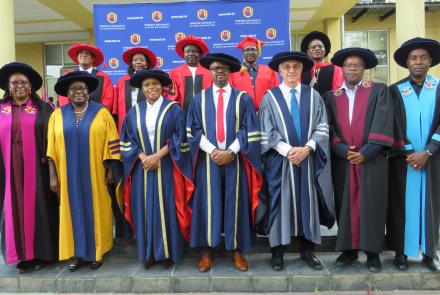
Research on preserving Namibia’s languages, creating jobs and making technology accessible took centre stage as the Namibia University of Science and Technology (NUST) inaugurated five professors on 30 October 2026.
The ceremony marked the close of Institutional Research Week 2026, recognising scholarship at the University’s highest academic rank and bringing years of research and mentorship into public view.
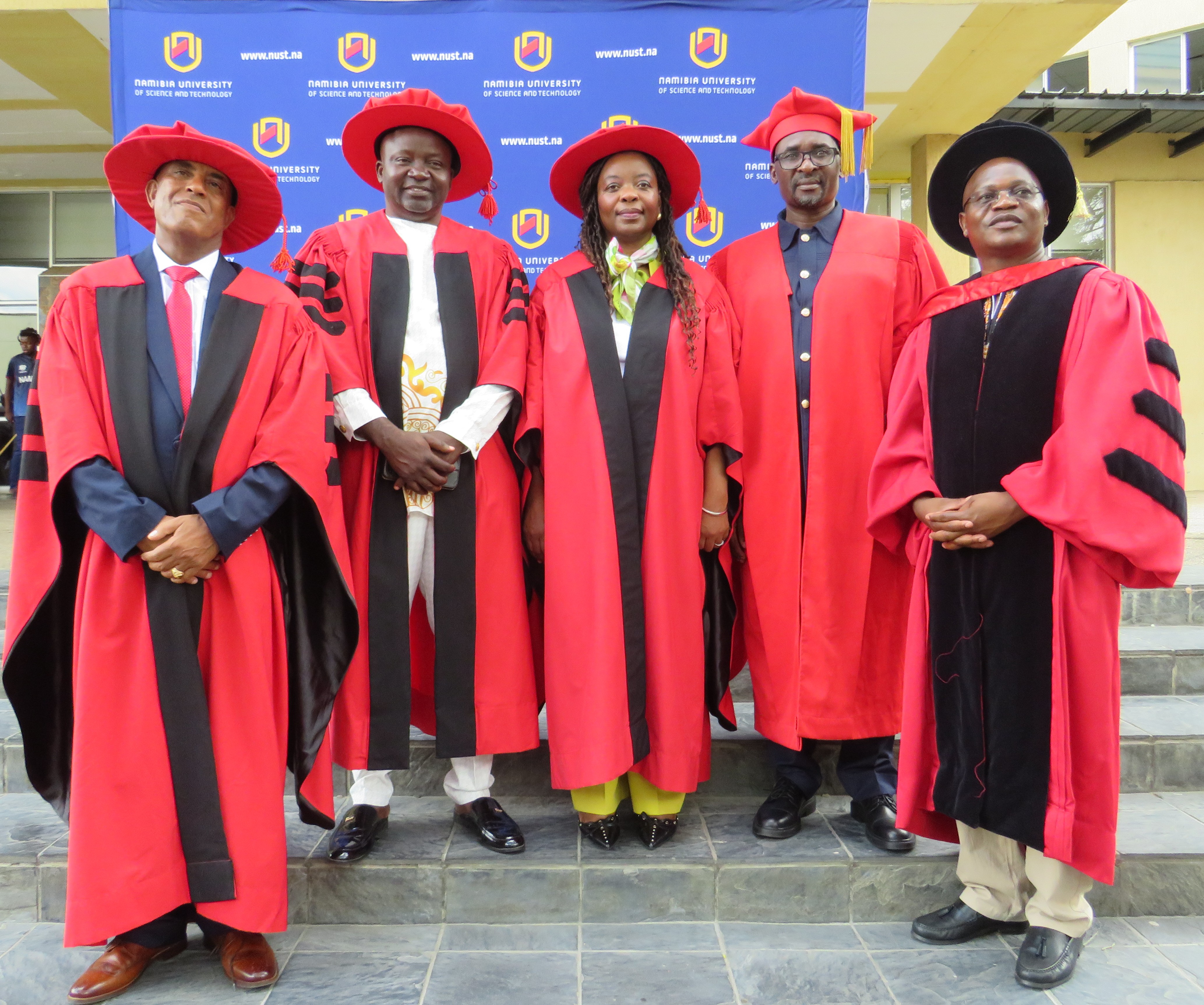
Institutional Research Week 2026.
Behind these contributions are academic journeys shaped by colleagues, students, mentors and families. Vice-Chancellor Prof Frednard Gideon acknowledged that shared effort, saying, “Academic achievement may be recognised individually, but the journey is seldom undertaken alone.”
Prof Haileleul Woldemariam described how his research with communities produced books in local languages, preserving stories and knowledge for future generations. He has supervised 55 master’s graduates across NUST and Ethiopia’s Adama Science and Technology University. “These books are owned by the community,” he said. He also explained how he used prize money from research awards to help postgraduate students publish their work.
During his work with !Kung speakers, Woldemariam recalled finding only two teachers who could write in the language. That detail made the stakes of language preservation tangible. Keeping a language available to future generations requires people who can teach it, materials they can use and opportunities for children to learn it. His account connected the recording of oral traditions with questions about education, belonging and whose knowledge is passed on.
Prof Nelson Mlambo explored how African literature expresses resilience and human dignity amid adversity. “How do we move from survival to flourishing?” he asked, examining how stories can help people imagine and pursue better futures. His research journey includes fellowships at the universities of Oxford and Leeds.
Prof Mlambo described a greeting whose response expresses the idea, “I am only well if you are well.” It placed well-being in the relationships between people. His discussion of African stories similarly made room for the support, choices and creativity through which people endure hardship. This gave his question about flourishing a collective dimension, extending it to families, communities and institutions.
Prof Tafirenyika Sunde examined the relationship between economic growth and people’s livelihoods, emphasising productive jobs, higher incomes and broader opportunities. “If real GDP is growing, where are the jobs?” Prof Sunde asked. The question shifted attention from the size of an economy to the opportunities available within it. He connected growth with households’ ability to earn a living, educate their children and access healthcare. His recommendations brought skills development, reliable infrastructure and stronger productive industries together, with investment supporting opportunities for local workers and suppliers.
Prof Jude Osakwe addressed how African institutions can adopt digital technologies responsibly through better management of data. His contribution to researcher development includes supervising three doctoral candidates to completion. Prof Osakwe’s wider research adapts international theories to institutions in Southern and West Africa, where resources and organisational conditions can differ from those assumed by existing models. His future agenda includes responsible artificial intelligence governance, data ethics and security. These questions concern how information is protected, who can participate in digital services and how institutions can adopt technology without deepening inequalities.
Prof Efigenia Semente connected innovation with people’s needs, including technology that older people can use and support for informal businesses. She outlined plans to work with communities, businesses and public services to translate findings into practical improvements.
Technology that is easy to use can help older people stay connected with family, make payments and access health information and services. Appropriate training and support can help informal entrepreneurs develop their businesses. Prof Semente’s proposed 2026–2030 agenda includes working with communities, regulators and businesses to develop practical approaches, then tracking whether they are adopted and how they perform. This makes the use and evaluation of research part of the work ahead.
The inauguration gave recognition to the people who have sustained those journeys and to the academic communities the professors have helped build. Their continued supervision, teaching and collaboration can equip other researchers to pursue new questions and carry the work further.
In her closing remarks, Acting Registrar Ms Selma Heelu called on the professors to “open doors for the next generation of scholars”.